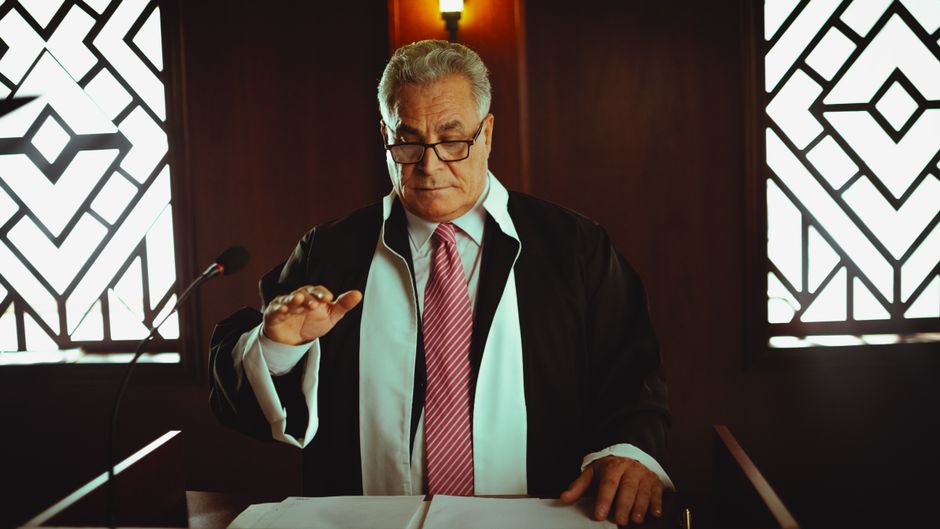
Former Supreme Court judge Hugh O’Flaherty was laid to rest this week as family, friends and legal figures gathered in Co Kerry to pay their respects to one of Ireland’s most distinguished judicial minds.
At his funeral Mass, those closest to him painted a picture of a man who was as warm and human as he was sharp and legally gifted. His son told mourners that his father possessed a “brilliant legal brain” but that what set him apart was something less easy to define in courtroom terms.
“He brought a compassion to the bench, which wasn’t always admired by the most strict lawyers,” his son said, capturing in one line the essence of a man whose approach to justice was never purely academic.
O’Flaherty served on the Supreme Court and built a reputation over decades as one of the sharper legal minds of his generation in Ireland. For those who appeared before him or worked alongside him, he was known for taking the law seriously while never losing sight of the people caught up in it.
The funeral brought together mourners in Kerry, the county he called home, to celebrate a life lived at the highest levels of Irish public and legal life. Tributes flowed for a man described as someone who understood that the law, at its best, is about people and not just procedure.
His career on the bench spanned some of the most significant years in the development of Irish constitutional and legal thinking. Colleagues remembered a judge who could cut through complexity with clarity, who prepared thoroughly and argued with precision, but who also understood the weight of the decisions being made in those courtrooms.
The mention of compassion as a defining trait drew knowing nods from those in attendance. In legal circles, O’Flaherty was understood to be someone who took a broader view, something that did not always sit comfortably with those who preferred a stricter, more rigid interpretation of the law. But for his family, that quality was not a weakness or a controversy. It was something to be proud of.
His son’s words at the Mass reflected a family that understood their father’s place in Irish legal history while also wanting to remember him simply as a man of decency and intelligence. The two things, they made clear, were not separate. His humanity was part of what made him a good judge.
O’Flaherty’s passing marks the end of an era in some respects. He belonged to a generation of Irish legal figures who shaped the courts during a period of enormous change in Irish society. The cases that came before the Supreme Court during his time touched on some of the most contested and consequential questions in modern Irish life, and he was part of the institution that had to answer them.
For the people of Kerry, he was also simply one of their own. The turnout at the funeral Mass reflected the respect and affection felt locally for a man who had reached the top of his profession without, by all accounts, ever becoming distant from where he came from.
Tributes continued to come in from across the legal world following his death, with former colleagues and legal scholars acknowledging the scale of his contribution to Irish jurisprudence.
What emerged most clearly from the funeral was a portrait of a man who took his responsibilities seriously, who worked hard, thought deeply, and cared genuinely about the outcomes of the cases that passed through his hands. That combination of intellect and empathy, his family suggested, was not incidental to his career. It was the heart of it.