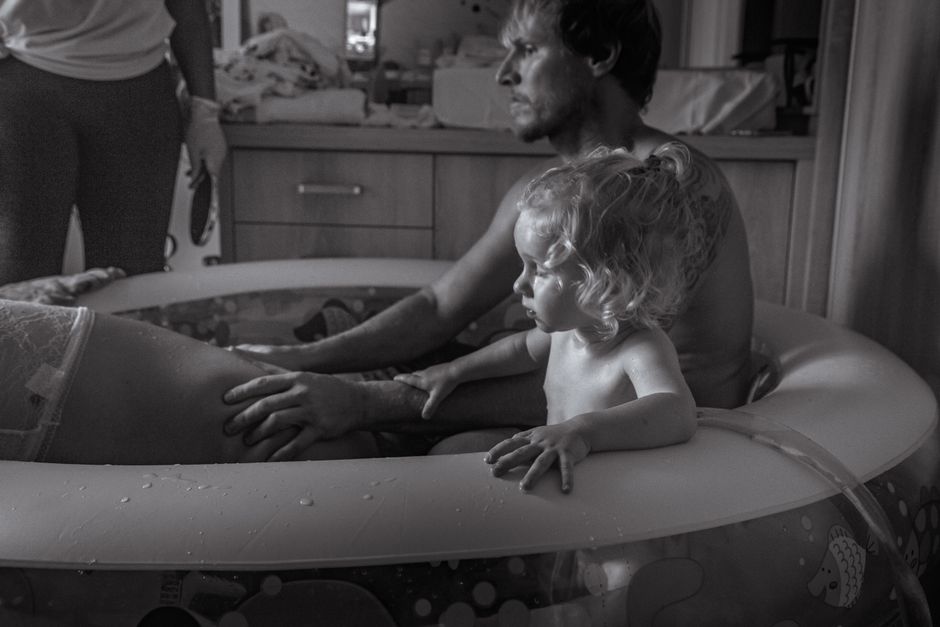
Women who choose to give birth in water will finally get a consistent standard of care across the country, thanks to Ireland’s first ever national clinical practice guidelines on the use of birthing pools.
Up until now, the experience a woman had when requesting a water birth could vary wildly depending on which hospital or maternity unit she walked into. Some units had their own local policies, others had very little in place at all. That inconsistency has been a frustration for both mothers and midwives for years.
The new guidelines are set to change that. Developed to standardise how birthing pools are used during labour and birth across Irish maternity services, they give clear direction to healthcare staff on everything from who is a suitable candidate for water labour or birth, to how pools should be managed and monitored throughout the process.
Water births have grown in popularity in Ireland over recent years, with many women drawn to the idea of labouring in warm water as a way to manage pain more naturally. The buoyancy can ease pressure on the body, and many mothers report feeling more relaxed and in control during what can be an intense experience. Some women choose to stay in the water only during labour and get out for the actual birth, while others opt to deliver their baby in the pool entirely.
Despite the demand, the lack of any national framework meant that access and safety standards were a bit of a postcode lottery. A woman in one county might have full support and a well-equipped pool available to her, while someone in another area could be told the option simply wasn’t on the table.
The new guidelines aim to fix that by giving every maternity unit in the country the same baseline to work from. They cover the clinical criteria that should be met before a woman uses a birthing pool, how to monitor both mother and baby during water labour, and the steps staff should take if any concerns arise. Infection control and pool hygiene are also addressed, which has been an area where standards have differed significantly between units.
For midwives, having a national document to refer to is a significant step forward. Many have been advocating for clearer guidance for a long time, and the new guidelines are expected to give staff more confidence when supporting women who want this option.
From a patient perspective, the guidelines represent a stronger recognition that women deserve reliable, evidence-based care no matter where in Ireland they choose to give birth. Choice in childbirth has become an increasingly important conversation in Irish maternity care, and water birth sits right at the heart of that debate.
The rollout of the guidelines across maternity services will be key to whether they make a real difference on the ground. Having a national document is one thing, but implementation requires training, investment in equipment, and a genuine commitment from hospital management to make water birth a properly supported option rather than an afterthought.
For expectant mothers considering their options, the message is clear. Water labour and birth is now being taken seriously at a national level in Ireland, and the care surrounding it should start to reflect that.