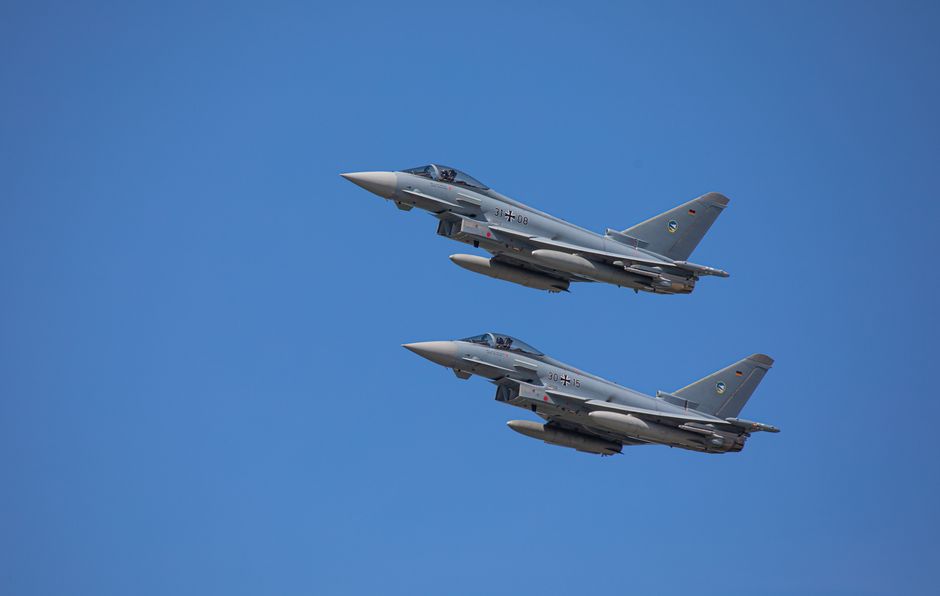
Ireland should be putting its money into drone technology rather than expensive fighter jets and naval ships, according to a former senior British security official who says traditional military hardware is becoming dangerously outdated.
The warning comes as European nations scramble to bulk up their defence capabilities amid growing concerns about security on the continent. But the advice for Ireland is clear: do not follow the same path that has left many larger militaries stuck with costly equipment that modern warfare is already making obsolete.
The core argument is simple. Cheap, lethal drones have fundamentally changed how conflicts are fought. What once required a multimillion euro aircraft and a highly trained pilot can now be replicated at a fraction of the cost using unmanned technology. Countries that have sunk billions into jets and warships are now sitting on assets that are increasingly vulnerable to attacks from drones that cost a tiny fraction of what they are defending against.
Ireland, which has long maintained a policy of military neutrality and operates one of the more modestly funded defence forces in Europe, is actually in a rare position here. Because it has not already committed to massive legacy systems in the same way other states have, it has a genuine opportunity to leapfrog outdated thinking and build a defence capability that is actually fit for the current threat landscape.
The Irish Defence Forces have faced years of criticism over underfunding, recruitment problems, and equipment that has at times been described as not fit for purpose. A Commission on the Defence Forces report published in 2022 laid out starkly how far behind Ireland had fallen, recommending a significant increase in the defence budget and a serious rethink of capabilities. The government has since committed to increasing spending, but the question of where exactly that money goes is now very much up for debate.
Investing in drone technology, surveillance systems, and cyber defence could give Ireland far more practical capability per euro spent than going down the traditional route of purchasing jets or expanding the naval fleet with conventional vessels. Modern security threats around Irish waters, including protection of undersea cables and energy infrastructure in the Atlantic, require persistent surveillance and rapid response capabilities that drone systems are increasingly well suited to provide.
The vulnerability of undersea infrastructure became a live issue for Ireland following the sabotage of the Nord Stream pipelines in 2022, and there have been ongoing concerns about the exposure of critical cables running through Irish waters that connect Europe to North America. Monitoring and protecting that kind of infrastructure does not necessarily require a conventional military build-up. It requires smart, persistent, cost-effective surveillance tools.
Drones, both aerial and maritime, fit that bill in ways that a handful of expensive fighter jets simply do not. A fleet of surveillance drones can cover vast stretches of ocean continuously, feeding real-time data to operators and responding to incidents far faster and more cheaply than traditional assets.
The broader European context matters here too. NATO members and EU states are under pressure to hit defence spending targets and many are rushing to procure traditional military hardware to meet those commitments. But as the war in Ukraine has demonstrated in real time, the battlefield has changed dramatically. Cheap commercial drones modified for military use have proven devastatingly effective, while expensive armoured vehicles and conventional systems have been picked off with relative ease.
For a country like Ireland that is starting something close to a fresh page on serious defence investment, that lesson should be front and centre in every procurement decision made over the coming years.
None of this means Ireland should ignore conventional capabilities entirely. A functioning naval service and credible air corps still matter for search and rescue, fisheries protection, and humanitarian operations. But the argument being made is about priorities and about not sleepwalking into spending billions on hardware that military strategists are already questioning.
The debate about Irish defence is no longer just a niche political conversation. With neutrality under public scrutiny, defence budgets rising, and real security threats emerging closer to home, the decisions made now about what Ireland actually buys and builds will shape the country’s security posture for decades to come. Getting those calls right matters more than ever.