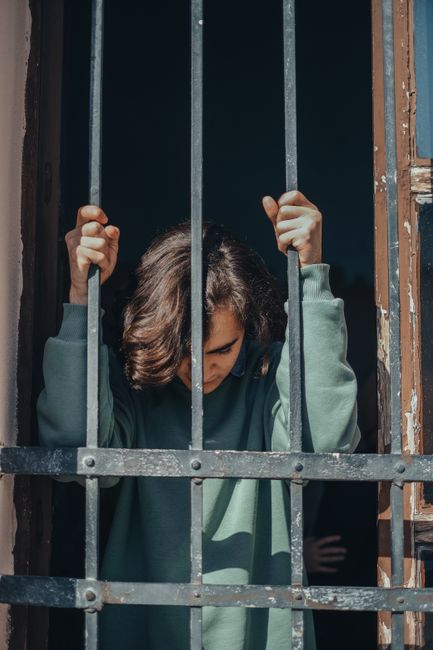
More than a decade after imprisonment for public protection sentences were scrapped, thousands of people in England and Wales are still serving them. Critics say the continued delay in fixing the situation amounts to psychological torture, and the human cost is becoming impossible to ignore.
Tommy Nicol was 31 years old when he was handed an IPP sentence in 2009 for stealing a car from a garage and injuring its owner. His minimum tariff was four years. But the Parole Board kept knocking him back, and by January 2015 he had already served six years with no clear end in sight. In a message to his family, he described what he was going through as the psychological torture of someone doing 99 years. Eight months later, aged 37, he hanged himself at The Mount prison in Hertfordshire. He had been inside for nine years.
What makes his death even harder to stomach is that IPP sentences had already been abolished three years before he died. The government scrapped them in 2012 after widespread criticism that they were unjust and unworkable. But the abolition was not made retroactive. Anyone already serving an IPP sentence at the time stayed on it. That decision has haunted the justice system ever since.
IPP sentences were introduced by David Blunkett as home secretary in 2005. The idea was to keep dangerous offenders locked up until they could prove they no longer posed a risk to the public. In theory it sounded reasonable. In practice it created a nightmare. Prisoners were given a minimum tariff, sometimes just a couple of years, but had no guaranteed release date. They could only get out if the Parole Board decided they were safe, and proving that was often an impossible task. Many were stuck in a loop, unable to access the rehabilitation courses they needed to demonstrate progress, and repeatedly knocked back with little explanation.
Blunkett himself has since called the creation of IPP sentences the biggest regret of his political career. That admission, while notable, has done nothing to free the people still caught up in the system he built.
The United Nations special rapporteur on torture, Alice Edwards, has backed up what Tommy Nicol said in that final message to his family. She has stated clearly that the IPP sentence amounts to psychological torture. Coming from a UN official with that specific mandate, it is about as serious a condemnation as it gets.
And yet, as of now, more than 2,000 people are still serving IPP sentences in England and Wales. Some of them received tariffs of just a few months, originally. Some have now been inside for well over a decade beyond that minimum period. They exist in a legal limbo where freedom is theoretically possible but practically out of reach, with no fixed release date and the constant threat of recall hanging over them even if they do eventually get out, since release comes with a lifelong licence.
Campaigners and families of IPP prisoners have been pushing for years for a proper resentencing exercise that would give these inmates a fixed release date and a genuine path out. The argument is straightforward. You cannot abolish a sentence because it is unjust and then leave thousands of people serving it indefinitely. That is not justice, it is just a slower version of the same injustice.
The political response has been frustratingly slow. Different governments have commissioned reviews, made sympathetic noises, and then moved on without taking meaningful action. Each delay means more years lost for people who were given sentences that the state itself has admitted should never have existed in the form they took.
For the families of those who have taken their own lives while serving IPP sentences, the reviews and the political hand-wringing are cold comfort. Tommy Nicol’s family have spoken publicly about his case in the hope that it might push things forward. He was described by those who knew him as kind and friendly, someone who made a serious mistake but who did not deserve to die in a prison cell years after his minimum sentence had expired.
The pressure is now on current justice leaders to stop passing the problem along and actually deal with it. Another review will not bring back Tommy Nicol or the others who have died waiting for a system that failed them to correct itself. What is needed is action, and it is needed now.