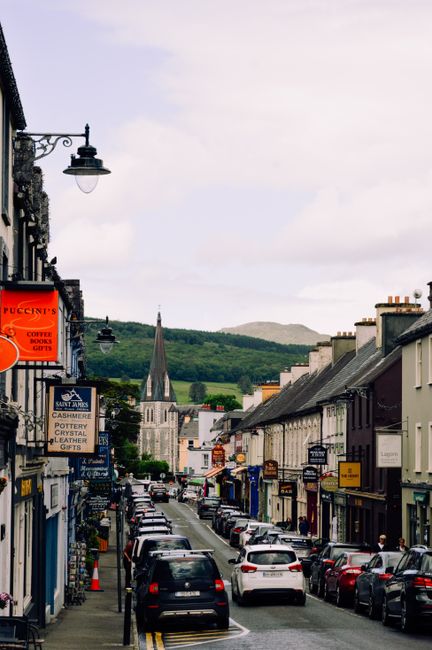
Walk through any town centre in Ireland on a Tuesday afternoon and you’ll notice something that’s become almost normal at this point – shuttered shops, empty units, and a handful of people wandering past premises that haven’t been open in years. It’s a picture that’s playing out from Athlone to Athenry, and people are starting to ask out loud whether anyone in power actually has a plan to fix it.
“They’re all dying” is how one trader put it recently, and it’s hard to argue with that when you look at the vacancy rates on some of Ireland’s once-busy high streets. The problem isn’t new, but there’s a growing sense that it’s getting worse, and that the window to do something meaningful about it is closing fast.
So what’s actually killing the main street? The honest answer is that it’s not one thing – it’s a pile-on. Online shopping has been chipping away at footfall for over a decade. Out-of-town retail parks pulled customers away long before that. Then came Covid, which accelerated everything and left a lot of businesses that were already struggling with no way back. Add in rising commercial rents, sky-high rates, and the sheer cost of running a physical premises in 2024, and you start to understand why so many shop owners have simply walked away.
For smaller towns especially, the impact goes beyond just losing a few shops. When the butcher closes, then the hardware store, then the café, you don’t just lose convenience – you lose the reason people come into town at all. Footfall drops, more businesses struggle, and the whole thing becomes a cycle that’s very difficult to reverse.
There have been efforts to address this. The Government’s Town Centre First policy, launched a few years back, was supposed to put town centres at the heart of planning and investment decisions. It set out a framework for bringing vacant properties back into use, improving public spaces, and making it easier for businesses to set up in town centres rather than on the edge of them. Some towns have seen real progress under the scheme. Others are still waiting to feel any difference on the ground.
Vacant property is one of the biggest sticking points. Ireland has thousands of commercial units sitting empty, many of them owned by landlords who have little financial pressure to do anything with them. The Vacant Property Refurbishment Grant has helped in some cases, particularly for turning old commercial buildings into homes, but critics say the incentives still aren’t strong enough to shift the balance. If it’s more profitable to sit on an empty building than to rent it out at a rate a small business can actually afford, a lot of landlords will keep doing exactly that.
Rates reform is another conversation that keeps coming up. Many traders argue that commercial rates – the local authority charges businesses pay – are simply out of step with what town centre shops can generate. A busy city centre retailer and a quiet small-town shop can end up paying similar rates, which makes no sense when you look at the difference in their turnovers. There’s been some movement on this, but business owners say it hasn’t gone nearly far enough.
The online shopping question is trickier because nobody is seriously suggesting you can or should stop people buying things on the internet. But there are arguments being made about levelling the playing field – making sure that large online retailers are contributing fairly to the tax base in a way that doesn’t leave physical shops at a structural disadvantage. It’s a debate that’s happening across Europe and there’s no easy answer, but Irish retailers feel it’s one that needs to be had more urgently here.
Some towns have found ways to fight back, usually by leaning into what an online retailer can never offer – community, experience, and a reason to get out of the house. Markets, events, independent food and drink, and creative businesses have given certain high streets a new identity. It doesn’t work everywhere, and it doesn’t replace the lost footfall from everyday retail, but it shows that the main street isn’t completely beyond saving if the right energy and investment goes in.
Local authorities have a big role to play here too. Planning decisions, parking policy, public realm investment – all of it shapes whether a town centre feels like somewhere worth going. Some councils have been proactive. Others have been slow to adapt, still approving out-of-town retail developments that directly undercut the town centres they’re supposed to be protecting.
The political will to tackle this seriously seems to be growing, at least in terms of the conversation. Whether that translates into the kind of sustained, properly funded action that would actually make a difference is another question. Ireland’s main streets have been in decline for long enough that fixing them will take more than a policy document and a few grants. It will take a genuine commitment to making town centre life viable again – for businesses, for residents, and for the communities that depend on them.
Honestly seen it happen in my own town too. Once Tesco moves in on the outskirts that’s basically it for the high street isn’t it. Would love to be proven wrong but I reckon it’s a lost cause at this point.