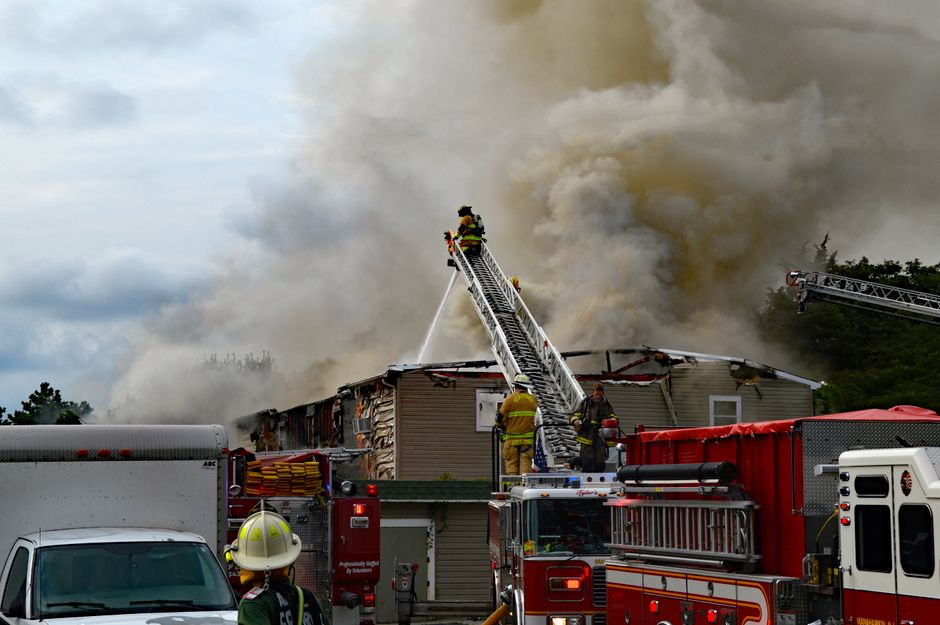
Hundreds of families remain unable to return to their homes as fire services across England declared major incidents following a series of serious blazes that have pushed crews to their limits.
Fire services in Stourbridge, Sandwell and Pershore were among those declaring major incidents as crews battled to bring multiple fires under control. The declarations reflect just how stretched resources have become, with firefighters working around the clock to protect homes and communities.
Residents in affected areas have been told to stay away while crews continue their work. For many families, that means nights spent away from home, relying on emergency accommodation or staying with friends and relatives while they wait for the all-clear.
The fires come during a period of dry and warm weather that has left grassland and open spaces tinder dry across much of England. Fire services have repeatedly warned in recent weeks that conditions are ripe for fires to spread quickly, and the current situation shows exactly how serious that risk has become.
Stourbridge and Sandwell, both in the West Midlands, saw significant fire service activity as crews tackled blazes affecting residential areas. Meanwhile in Pershore, Worcestershire, firefighters faced similar challenges with fires burning close to homes and farmland.
Declaring a major incident is not a decision fire services take lightly. It unlocks additional resources and allows emergency services to coordinate more effectively across different agencies, including police and local councils. It also signals to the public that the situation is serious and that emergency services are under significant pressure.
Local councils in affected areas have been working alongside fire crews to support displaced residents, setting up rest centres and providing basic supplies for those who have had to leave their homes at short notice. For some residents, particularly older people and families with young children, the disruption has been especially difficult to manage.
Firefighters have urged the public to avoid lighting barbecues or having bonfires in open spaces during the current dry spell. Discarded cigarettes and broken glass left in fields have also been highlighted as common causes of grass fires that can spread rapidly in warm and windy conditions.
The strain on fire services is a growing concern. Crews who have already been dealing with a higher than normal call-out rate are now managing multiple major incidents simultaneously, raising questions about capacity and resources heading into what could be a long summer.
Environmentalists and emergency planners have pointed out that scenes like this are likely to become more common as climate change drives hotter, drier summers across England. The infrastructure and staffing levels at many fire services were not designed with this kind of sustained pressure in mind, and there are growing calls for the government to review how fire services are funded and resourced.
For now though, the immediate priority is getting families safely back into their homes and ensuring the fires are fully extinguished. Residents in affected areas have been asked to follow the advice of local emergency services and avoid returning until they are officially told it is safe to do so.