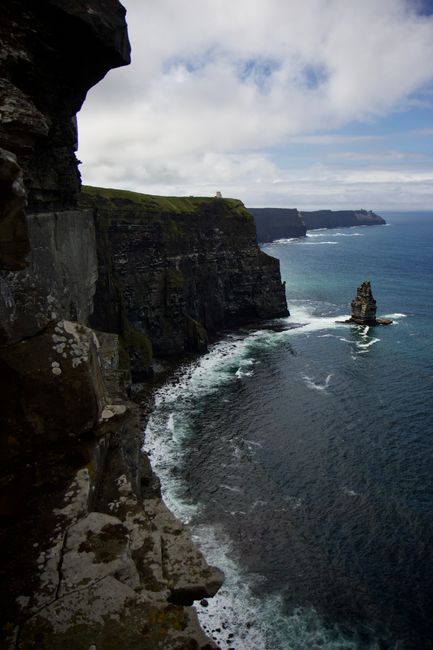
A massive section of one of the most iconic rock formations at the Cliffs of Moher has collapsed into the Atlantic Ocean, with the whole thing caught on camera by an American tourist visiting the Clare landmark.
The sea stack, one of the most photographed features along the famous coastline, gave way and plunged into the water below in a dramatic moment that left onlookers stunned. The footage, captured by the visiting tourist, shows the rock face breaking apart and tumbling into the churning sea beneath the cliffs.
The Cliffs of Moher stretch for around 14 kilometres along the Clare coastline and rise to over 200 metres at their highest point. They attract roughly one million visitors every year, making them one of the most visited natural attractions on the island of Ireland. The sea stacks dotted along the base of the cliffs are a key part of what makes the scenery so striking, shaped over thousands of years by the relentless pounding of Atlantic waves.
Geologists and coastal experts have long pointed out that the west coast of Ireland is in a constant state of change. The combination of powerful Atlantic swells, wind erosion, and the natural composition of the rock means that collapses like this are not just possible but inevitable over time. The cliffs are made largely of sandstone and siltstone, which while visually spectacular, are vulnerable to erosion and gradual weakening at the base.
This kind of event, while dramatic to witness, is a completely natural part of how coastlines evolve. Sea stacks form when waves erode the base of a cliff, eventually cutting through to create an arch, and then over more time that arch collapses leaving a freestanding pillar of rock. When that pillar finally gives way, it is simply the next stage in a process that has been going on for millions of years.
The timing of the collapse, happening right in front of a tourist with a camera rolling, is what makes this particular event so striking. Most of these natural changes happen unobserved or are only noticed after the fact when visitors or rangers spot that something looks different along the cliff edge.
The Cliffs of Moher Visitor Experience, which is managed by Clare County Council, regularly monitors the site and has safety barriers and designated viewing areas in place to keep visitors at a safe distance from the cliff edge. The collapse of the sea stack happened at the base of the cliffs and posed no direct risk to people on the viewing paths above.
Footage of the collapse has been widely shared online since it was posted, drawing attention from people across Ireland and internationally. For many, it serves as a reminder of just how powerful and unpredictable nature can be, even at a site people have visited and photographed countless times.
The Cliffs of Moher have been a protected natural heritage area for decades, and any significant changes to the landscape are typically documented by researchers and environmental bodies. This latest collapse will likely be of interest to geologists studying coastal erosion patterns along the Wild Atlantic Way.
For now, the site remains open to visitors as normal, with no impact on access reported following the rock fall.
Gutted about this, honestly. Been there twice and it’s just breathtaking. Nature does what it wants though dunnit, can’t really argue with that. Hope no one was nearby when it went down.