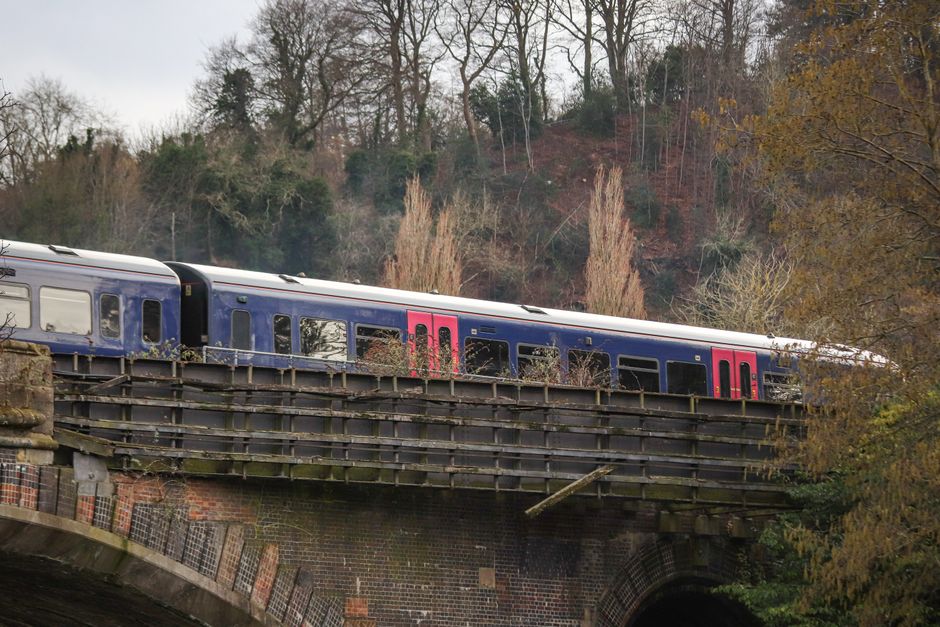
Commuters heading to and from Glasgow faced serious disruption today after two separate major incidents brought large parts of the rail network to a standstill.
Network Rail confirmed it was dealing with both incidents at the same time, leaving passengers stranded and services cancelled across multiple routes.
The first incident involved a lorry striking a rail bridge, a recurring problem on Scotland’s rail network that causes significant damage and requires engineers to inspect the structure before any trains can safely pass over it. Until that inspection is completed and the bridge is declared safe, services through that stretch of line remain suspended.
The second incident involved damaged overhead cables, which power electric trains across the network. When overhead lines come down or are damaged, it creates a dangerous situation that cannot simply be worked around. Engineers have to attend the site, make the area safe, and carry out repairs before power can be restored and trains can run again.
Having both incidents happen at the same time put Network Rail and ScotRail under serious pressure, with knock-on delays spreading well beyond the directly affected routes.
Passengers were advised to check before travelling, with replacement bus services being looked at for some routes. Journey times for anyone who could still travel were expected to be significantly longer than usual.
Bridge strikes by heavy goods vehicles are a persistent headache for Scotland’s rail operators. Despite warning signs, height restriction bars, and camera systems installed at many bridges across the country, lorries continue to clip or fully strike railway bridges every year. Each incident triggers a full structural inspection, and depending on the damage, repairs can take hours or even days.
Overhead line damage is equally disruptive. The electrified network around Glasgow is one of the busiest in Scotland, and any fault in the overhead equipment can cascade quickly, affecting dozens of services in a short space of time.
Network Rail said its teams were on site and working as fast as possible to assess the damage and get lines reopened. No timescale for full recovery was given in the immediate aftermath, leaving many passengers uncertain about whether to wait it out or make alternative arrangements.
ScotRail urged anyone planning to travel into or out of Glasgow to check the latest updates through its app or website before heading to the station, warning that the situation was still developing and further cancellations were possible while both incidents were being dealt with.
For commuters who rely on the Glasgow network during peak hours, days like this are a reminder of just how fragile the system can be when multiple problems hit at once. With no quick fix available for either a bridge strike or overhead cable damage, the disruption was set to run for several hours at minimum.