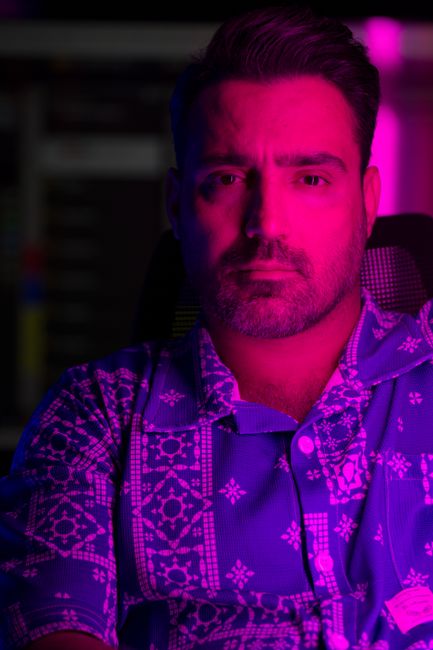
At his peak, Russ Abbot was pulling in 18 million viewers every Saturday night. Kids were doing his impressions in school playgrounds, parents were quoting his sketches at the dinner table, and grandparents were laughing along from the armchair. For a solid decade, he was one of the biggest names on British television. So what happened?
Abbot, now 78, lives quietly at a villa in Portugal. Electronic gates, a swimming pool, and a man who looks genuinely surprised that anyone has bothered to make the trip. ‘You’ve made me feel very important,’ he says at the door. It’s a modest reaction from someone who once owned Saturday nights.
His rise through British entertainment was relentless. Russ Abbot’s Madhouse launched in 1980 and ran until 1985, followed almost immediately by The Russ Abbot Show, which continued until 1991. The format was classic sketch comedy, built around characters, songs and sharp impersonations, but it was Abbot’s warmth and energy that kept audiences coming back. He shared the screen with Bella Emberg, whose comic timing became legendary, as well as a supporting cast that included Les Dennis, Dustin Gee and a young Michael Barrymore.
But the success came at a serious cost. In 1984, at the absolute height of his fame, Abbot worked 363 days. Not weeks. Days. He was writing, filming, touring and performing almost without pause. The kind of schedule that would finish most people off before they hit their stride.
After the TV years came West End musicals and sitcoms, proving he was more than just a sketch show performer. He had genuine range, and the industry knew it. Work kept coming and he kept saying yes.
Then, in 2016, he stepped back. No dramatic announcement, no farewell tour, no tell-all interview. He simply stopped, packed up and moved abroad. For a man who had spent decades chasing the next job, the next audience and the next laugh, the decision to walk away quietly was striking.
Abbot’s story sits in a particular tradition of British light entertainment that feels almost impossible to imagine now. The Saturday night sketch show, broadcast to the whole family at once, drawing tens of millions of viewers to a single channel. That world is long gone. Audiences are fragmented, attention spans are shorter, and the idea of one comedian uniting 18 million people on a single evening feels like it belongs to another era entirely, because it does.
What made Abbot work was his accessibility. He was never edgy or divisive. He was funny without making anyone feel uncomfortable, which sounds simple but is actually one of the hardest things to pull off in comedy. His characters were daft, his timing was sharp, and his performances had a physical energy that translated perfectly to the small screen.
The supporting cast he worked with also went on to shape British entertainment for years. Les Dennis became a household name in his own right. Michael Barrymore became one of the biggest TV presenters of the late 1980s and 1990s. The Russ Abbot Show was, in many ways, a launching pad as much as it was a destination.
Sitting in Portugal now, Abbot seems at peace with how things turned out. The villa, the pool, the quiet life. For a man who spent the best part of two decades barely stopping to breathe, the stillness seems deliberate. He earned it.
British television in the 1980s produced a handful of performers who genuinely crossed every demographic line, and Abbot was one of them. His shows were event television before anyone used that phrase. The fact that he chose to leave on his own terms, without fuss, without drama, says something about the man that the viewing figures never quite captured.
Blimey, 363 days a year is absolutely mental. No wonder he walked away, I’d have lost the plot years before he did. Fair play to him for lasting as long as he did tbh.