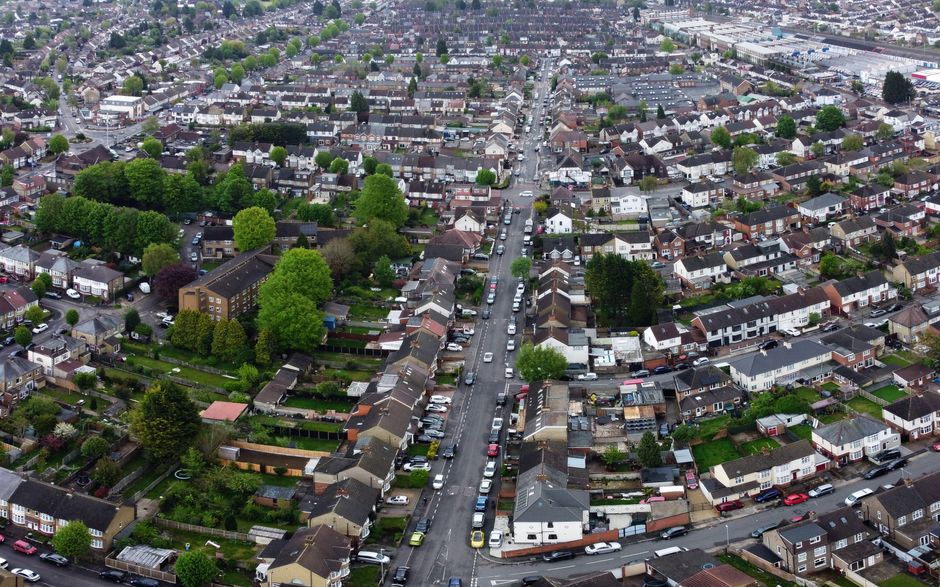
Andy Burnham has made English devolution his signature mission, and he is moving fast. But as power starts shifting away from Westminster and Whitehall, a growing number of voices are asking whether the whole country is actually going to benefit, or whether cities are just going to pull even further ahead while everywhere else gets left scrambling.
The groundwork was actually laid under Keir Starmer. The English Devolution and Community Empowerment Act, passed earlier this year, set the wheels in motion for some of the most significant changes to local government in decades. Areas that previously ran on a two-tier council system are being moved over to new unitary authorities, simplifying the structure and cutting out layers of bureaucracy that many felt had been slowing things down for years.
But the bigger deal, at least in terms of ambition, is what is happening with regional mayors. The government is calling these new structures ‘strategic authorities’, and the official line from Whitehall is that this represents a ‘fundamental rewiring of the way our country works’, with power being surrendered after years of it sitting in Westminster. Strong words, and for many people in regions that have long felt ignored by central government, genuinely exciting ones.
Burnham himself is at the centre of all this. Having built his reputation as Greater Manchester’s metro mayor, he knows the model from the inside. He knows what it can do when it works, and he knows what it looks like when it stalls. Now, as the person driving the national agenda, he is pushing to roll it out much more broadly and much more quickly.
The time pressure is real. If Burnham’s first term runs its full course, he has roughly three years to work with. That is a tricky window. It is too long to just lay out a vision and leave the heavy lifting for a second term, but probably too short to see major structural reforms through from start to finish. His response, by most accounts, is to move at pace on the things he cares most about, and devolution is right at the top of that list.
The problem is that England is not a uniform place, and devolution has not arrived everywhere at the same time or in the same way. Some city regions are years deep into this journey. Greater Manchester has had a metro mayor since 2017. The West Midlands, West Yorkshire, and others have followed. These places have had time to build capacity, develop relationships with central government, and start delivering on the kinds of powers that come with the role.
But plenty of other parts of England are only just getting started. Smaller towns, rural areas, and counties that do not fit neatly into a city-region model are still working out what devolution even means for them. Some are in the early stages of forming new structures. Others are watching what happens elsewhere and trying to figure out whether they want in, or whether the whole thing is going to work in their favour at all.
There is a genuine risk here that the devolution drive ends up reinforcing existing divides rather than closing them. Cities with strong mayors, established institutions, and clear economic identities are well placed to grab the new powers on offer and run with them. But areas without that infrastructure, without the political leadership or the administrative capacity to move quickly, could find themselves falling further behind.
The government has talked a big game about this being a nationwide shift, not just a boost for the big urban centres. But critics are pointing out that the reality on the ground tells a more complicated story. The areas that are already ahead in the devolution process are likely to get more, faster. The ones that are behind are going to need serious support if they are going to catch up.
There are also questions about accountability. Regional mayors are powerful figures, and the checks on that power matter. As more decisions get made at the regional level rather than in Westminster, the public needs to know who is responsible for what, and how to hold them to account when things go wrong.
None of this means the direction of travel is wrong. Shifting power out of Whitehall and closer to the communities it affects is broadly the right idea, and there is strong cross-party support for the principle even if the details are contested. But the execution is going to matter enormously, and the gap between the places that are ready for this and the places that are not is a problem that needs addressing now, not later.
Burnham is in a hurry, and in some ways that energy is exactly what this agenda needs. But speed without a plan for the places being left behind is not devolution. It is just a new version of the same old uneven England.