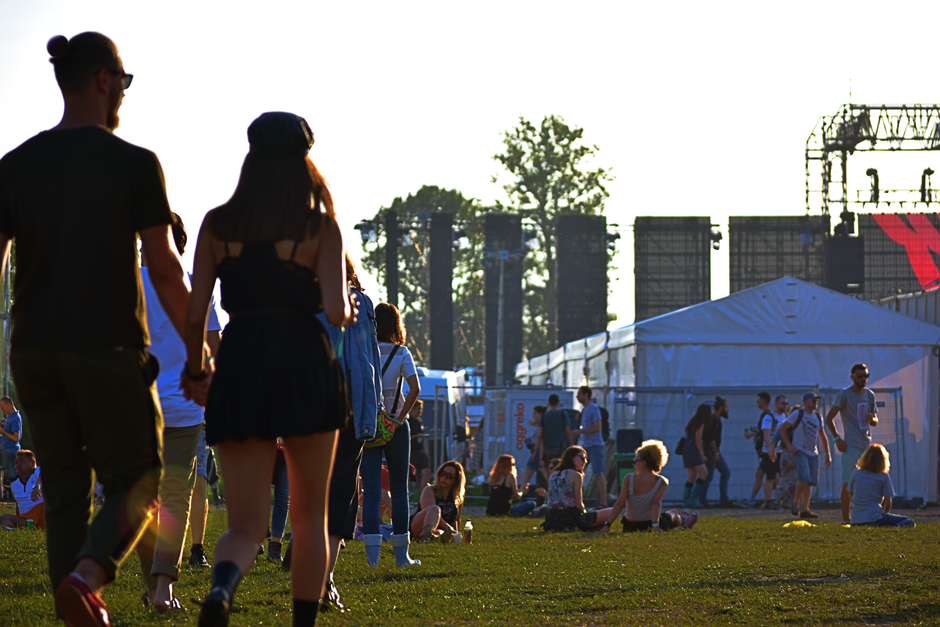
Reading and Leeds has always been a rite of passage. You finish your GCSEs, you beg your parents, you end up in a field covered in mud with ten thousand other teenagers feeling like you’ve finally made it. But beyond that reliable annual tradition, the festival has spent years trying to figure out what it actually stands for.
Post-Covid, that identity crisis got worse. Last year’s attempt to organise days around specific genres felt clunky and out of touch. This time around, organisers took a different approach and leaned into the chaos rather than trying to contain it. New stages have been added, including the Ballroom, a chandelier-decorated space that feels more like a nightclub than a festival tent. The overall lineup this year is wonderfully unpredictable, jumping between sounds and scenes in a way that actually reflects how young people listen to music in 2026.
And the results speak for themselves. The biggest crowds of the weekend were not gathering for rock bands or pop headliners. They were turning up in massive numbers for tech house DJs like Kettama and Josh Baker, names that would have meant nothing to a Reading crowd a decade ago but now pull turnouts that would make guitar bands jealous. Dance music has not just found a place at Reading and Leeds. It has quietly taken over.
That is not to say the rest of the lineup disappointed. Charli xcx delivered a headline set at Reading that was equal parts theatrical and genuinely thrilling, the kind of performance that justifies the hype that has followed her for the past two years. Fontaines DC were spellbinding, their post-punk intensity cutting through the summer heat in a way that reminded everyone why they are one of the most important guitar bands working right now.
Over at the second stage, the range of music on offer was genuinely impressive. UK rap and garage selector DJ EJ warmed up early crowds, while 4am Kru brought raw, live-drummed jungle that felt urgent and completely alive. Geese, the warbly US rock outfit, held their own in a slot that could have gone either way.
One of the more surprising highlights came from Slovakian pop star Adéla, who dedicated a song to, in her words, all the bad bitches from small places, before launching into her neon-streaked hit Ain’t in LA. The crowd absolutely lost it. London singer Dexter brought blue-skied bedroom pop that felt genuinely refreshing in the afternoon heat, while Australian artist Mall Grab delivered Game Boy grime beats that somehow worked perfectly in a festival tent in Yorkshire.
Bar Italia also deserve a mention. Their recent album reviews have been lukewarm at best, but live they are a completely different proposition. Their set was dancey, loose and fun in a way that their recorded output does not always suggest. Festivals have a way of doing that for certain bands.
What ties all of this together is that Reading and Leeds in 2026 feels like a festival that has stopped trying to be one thing. Gen Z does not organise their listening habits into neat boxes, and this year’s event finally reflected that. You could go from jungle to bedroom pop to tech house to post-punk without it feeling jarring, because for a lot of the people in those crowds, that is just a normal Saturday.
The dominance of dance music is the headline story, but the real takeaway is that the festival has found a new kind of energy. It is messier and harder to define than the rock-heavy lineups of its past, but it is also more honest about where British youth culture actually is right now. Reading and Leeds has always been about that first taste of freedom. This year, it finally felt free itself.