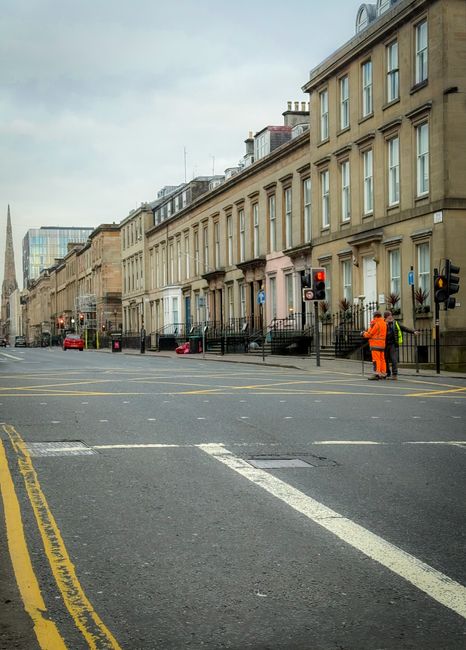
A dispersal zone in one of Glasgow’s busiest areas is set to remain in place until December, with police now exploring the possibility of setting up a base in the Four Corners area to boost their visibility on the ground.
The zone, which covers the junction of Sauchiehall Street, Renfield Street and Bath Street in the city centre, gives officers the power to move on groups of people they believe may cause antisocial behaviour or disorder. It has been a controversial but increasingly common tool used by Police Scotland to manage trouble hotspots.
The decision to extend the zone through to December signals that authorities are far from satisfied that the underlying issues in the area have been resolved. Rather than winding things down, Police Scotland appears to be doubling down, with talks ongoing about whether officers could occupy a physical premises within the Four Corners district itself.
Having a dedicated police base in the area would allow officers to respond faster to incidents, maintain a more consistent presence and act as a visible deterrent to those who might otherwise cause problems. It is the kind of boots-on-the-ground approach that community groups and local businesses have long called for in areas blighted by persistent antisocial behaviour.
The Four Corners area has long been a focal point for issues including street drinking, drug use and late-night disorder, particularly given its location at the heart of Glasgow’s nightlife and retail scene. The dispersal zone was introduced as a direct response to growing concerns from residents, workers and visitors about safety in the area.
Under the powers granted by a dispersal zone, police can direct individuals to leave a specific area for up to 48 hours if they have reasonable grounds to believe their presence is contributing to, or is likely to contribute to, harassment, alarm or distress to members of the public. Anyone who returns within that period without reasonable excuse can face arrest.
The extension through December is significant given that the festive season brings a massive surge in footfall to Glasgow city centre. Thousands of shoppers, tourists and revellers descend on the area in the run-up to Christmas, and keeping the dispersal powers active through that period gives officers greater flexibility to manage what can be a chaotic and at times volatile environment.
Local businesses in the Four Corners area have broadly welcomed the continued police focus on the zone. Many have spoken previously about the impact that visible disorder has on customers, with some saying that people actively avoid the area at certain times of day or night because of safety concerns. A permanent or semi-permanent police presence in the area could go some way to changing that perception.
Critics of dispersal zones, however, argue that they simply move problems from one location to another without addressing the root causes of antisocial behaviour. Charities and advocacy groups working with homeless people and those struggling with addiction have previously raised concerns that such powers can be used in ways that criminalise poverty rather than tackle it.
Police Scotland has not yet confirmed the exact details of any potential premises in the Four Corners area, but the fact that it is being actively considered suggests a longer-term strategic commitment to the zone rather than a short-term fix.
For now, the dispersal zone remains in force and officers will continue to patrol the area with the extended powers at their disposal. Whether a physical base materialises before December remains to be seen, but the direction of travel is clear. Glasgow city centre, and the Four Corners junction in particular, is going to remain under close police watch for the foreseeable future.