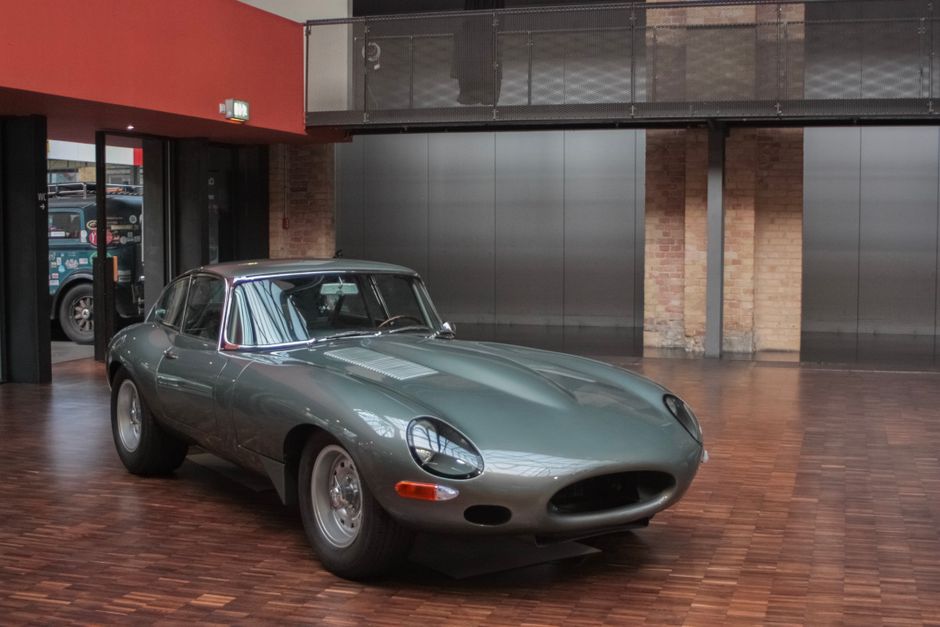
Jaguar has officially pulled the wraps off its Type 01 Grand Tourer, a monster of an electric vehicle that costs £150,000 and is, by most practical measures, completely unsuitable for everyday life in England. It won’t fit in most UK car parks, its wheels are roughly the size you’d expect on a military vehicle, and yet somehow it comes in a colour called London red. Make that make sense.
The Type 01 is Jaguar’s big swing at reinventing itself as a luxury electric brand, and it is nothing if not bold. The car is enormous. We’re talking a grand tourer built on a scale that makes you wonder whether the designers have ever actually tried to park anything on a British high street. Multi-storey car parks across the country would simply laugh it out of the entrance.
But here’s the thing. Cars like this were never really meant to be practical. They’re statements. They tell you something about where a brand thinks the world is heading, and what kind of buyer they’re chasing. In Jaguar’s case, the Type 01 is aimed squarely at wealthy buyers, particularly younger Americans with serious money and a taste for something that feels genuinely different from the usual crop of electric SUVs.
The price tag sits at around £150,000, which puts it in a bracket most people in England will never come close to. For that money you get a stunning looking machine with serious electric performance credentials, a cabin that Jaguar says redefines what luxury feels like inside a car, and those frankly absurd wheels that dominate the profile of the whole vehicle.
Jaguar has been on a strange journey over the past couple of years. The brand caused quite a stir when it released a rebrand that left a lot of people confused, dropping its classic heritage imagery in favour of something far more abstract and fashion-forward. The Type 01 is the first proper product to come out of that new direction, and love it or hate it, you cannot say it looks like anything else on the road.
The electric drivetrain puts out serious power, and the range figures are expected to be competitive with other high-end EVs in the same price bracket. Jaguar has not released every technical detail yet, but what has come out suggests this is a genuine performance car rather than just a pretty shell with an electric motor bolted in.
For England specifically, the Type 01 raises some real questions. Our roads were not built for cars of this size. Our city centres, our market towns, our narrow country lanes, none of them are particularly welcoming to a vehicle with the footprint of a small boat. The irony of naming a colour after London, one of the most congested and parking-challenged cities on earth, is not lost on anyone.
There is also the broader conversation about what electric vehicles at this end of the market actually mean for the push toward greener transport. A £150,000 EV is not going to move the needle on emissions in any meaningful way. It is a luxury product for a tiny slice of the population, and while it might generate headlines and shift perceptions of what electric cars can be, it does nothing to solve the practical challenges facing ordinary drivers trying to go electric on a normal budget.
Still, as a piece of industrial design and as a signal of intent from a brand that has been through a turbulent few years, the Type 01 is hard to dismiss. Jaguar is clearly done trying to compete in the middle of the market. This is a full pivot toward the top end, toward buyers who want something rare and dramatic and willing to pay handsomely for it.
Whether that strategy pays off remains to be seen. The luxury EV space is getting crowded, with Porsche, Bentley, Rolls-Royce and a growing number of Chinese brands all competing for the same wealthy customers. Jaguar will need the Type 01 to deliver on its considerable promise when it actually reaches buyers.
For now though, it sits as one of the more fascinating cars to come out of a British brand in years. Impractical, expensive, and completely over the top. Very much a car for the world Jaguar wants to exist in, rather than the one most of us actually live in.