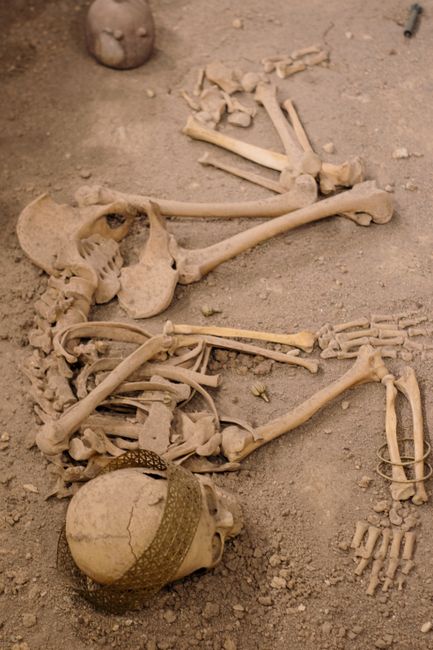
Workers on a construction site in England have made a remarkable discovery after stumbling across seven human skeletons buried beneath the ground. The remains have been linked to the Medieval period, when the land is believed to have served as a cemetery.
The find brought work to a halt as archaeologists were called in to carefully excavate and examine the bones. It is not uncommon for construction projects across England to uncover remnants of the country’s deep history, but finding multiple intact skeletons in one location is still considered a significant event.
Experts believe the burial site dates back hundreds of years, pointing to a time when the land was likely part of a religious or community burial ground. Medieval cemeteries were often attached to churches and chapels, many of which have long since disappeared or been built over as towns and cities expanded across the centuries.
Archaeologists on site have been working to carefully document the position and condition of each skeleton before the remains are removed for further analysis. The way bodies were buried, including their orientation and any objects found nearby, can tell researchers a great deal about the beliefs and social customs of the people who lived during that era.
Finds like this offer a rare and direct connection to ordinary people from the past. Unlike kings, nobles, or famous historical figures, those buried in community cemeteries were typically everyday men and women whose lives rarely made it into the history books. Studying their remains can reveal details about diet, disease, physical hardship, and even the kind of work they did during their lifetimes.
Bone analysis can also provide clues about the age and sex of the individuals, and in some cases, signs of injury or illness can be identified. Modern techniques including radiocarbon dating will likely be used to pin down a more precise timeframe for when these people lived and died.
The discovery has sparked interest from local historians and heritage groups, who see it as an opportunity to better understand the history of the area. England is packed with layers of history sitting just beneath the surface, and construction work frequently acts as an accidental trigger for uncovering it.
Under English law, any discovery of human remains at a construction site must be reported to the relevant authorities, and work in the affected area must stop until the site has been properly assessed. Historic England and local council archaeologists typically get involved to ensure the remains are treated with respect and that any historically significant findings are properly recorded.
It remains to be seen whether the construction project will be affected long term, but for now, the focus has shifted from building something new to understanding something very old. The seven individuals found at the site lived during a period that shaped much of what England looks like today, and their unexpected reappearance is a reminder of just how much history lies buried beneath modern life.