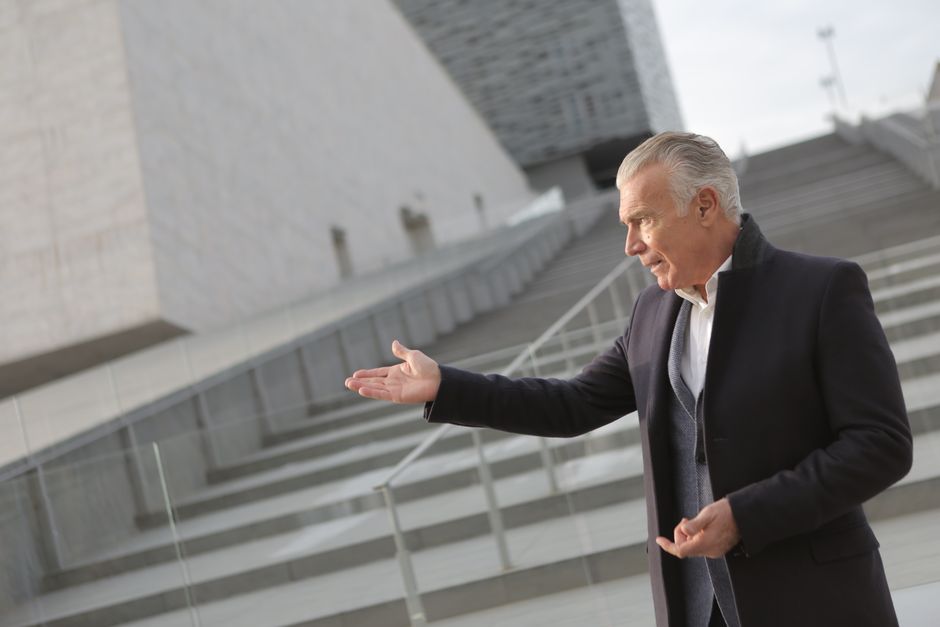
Michael Fingleton, the former chief executive of Irish Nationwide Building Society whose name became synonymous with the reckless lending that helped bring Ireland to its knees, has died.
Fingleton ran Irish Nationwide for over three decades, building it from a modest building society into one of the most aggressive lenders of the Celtic Tiger era. To his supporters, he was a self-made man who gave ordinary Irish people access to mortgages and loans when the bigger banks wouldn’t look at them. To his critics, and there were many, he was the face of everything that went wrong with Irish banking.
His tenure at the top of Irish Nationwide stretched from 1971 right through to 2009, a remarkable run that saw him accumulate enormous personal influence in Irish financial and political circles. He was known as ‘Fingers’ and operated Irish Nationwide almost as a personal fiefdom, with a management style that later investigations would describe as deeply problematic.
When the financial crisis hit Ireland with full force in 2008 and 2009, Irish Nationwide was one of the institutions at the centre of the storm. The building society had piled heavily into commercial property lending during the boom years, chasing the kind of big developer deals that were far removed from its original purpose of helping ordinary savers and homeowners. When the property market collapsed, the losses were staggering.
Irish Nationwide was eventually absorbed into the Irish Bank Resolution Corporation, the vehicle set up by the state to wind down the most damaged institutions after the bailout. The total cost to Irish taxpayers of cleaning up Irish Nationwide ran to around 5.4 billion euro, a figure that caused enormous public anger at the time and for years afterwards.
Fingleton himself became a lightning rod for that anger. He had received a one million euro bonus in 2008, the very year the Irish financial system was collapsing and the state was preparing to pour billions into propping up the banks and building societies. The bonus, which he kept despite widespread calls to return it, became one of the most talked about symbols of banker excess during the crisis.
For years after leaving Irish Nationwide, Fingleton faced the prospect of regulatory and legal proceedings. The Central Bank of Ireland investigated his conduct and that of other former executives. The process was extraordinarily lengthy and drew repeated criticism from politicians and the public who felt that accountability for the banking collapse was painfully slow in coming.
His death closes a chapter on one of the most turbulent periods in modern Irish economic history. The Celtic Tiger years promised a new Ireland, wealthy and confident, and for a time it delivered exactly that. But the model was built on debt, on developers borrowing hundreds of millions to throw up apartments and office blocks, and on institutions like Irish Nationwide feeding that frenzy without adequate checks or caution.
Fingleton was not alone in driving that culture. The broader Irish banking system, the financial regulator, the government of the day and the wider political establishment all played their parts in allowing the bubble to inflate to dangerous levels. But few individuals were as closely identified with the era as he was.
For the hundreds of thousands of Irish people who lived through the crash, who lost jobs, emigrated, had homes repossessed or spent years paying off debts from the austerity era, Fingleton’s name carried a particular weight. He represented the sense that those at the top had gambled with other people’s money and futures, and had largely avoided the kind of consequences that ordinary people faced.
His legacy is complicated and contested, as legacies from that era tend to be. The Ireland of today, having largely recovered economically, still carries the scars of what happened. The banking inquiry, the bailout, the years of austerity all shaped the country in ways that are still visible in housing policy, in public trust in institutions, and in the political landscape.
Michael Fingleton was a product of his time, and in many ways he helped create that time. Ireland will not forget what that era cost.
Never really felt much sympathy for blokes like him honestly. Made a fortune while ordinary people were left picking up the pieces. Still, dead is dead innit. Rest in peace I suppose.