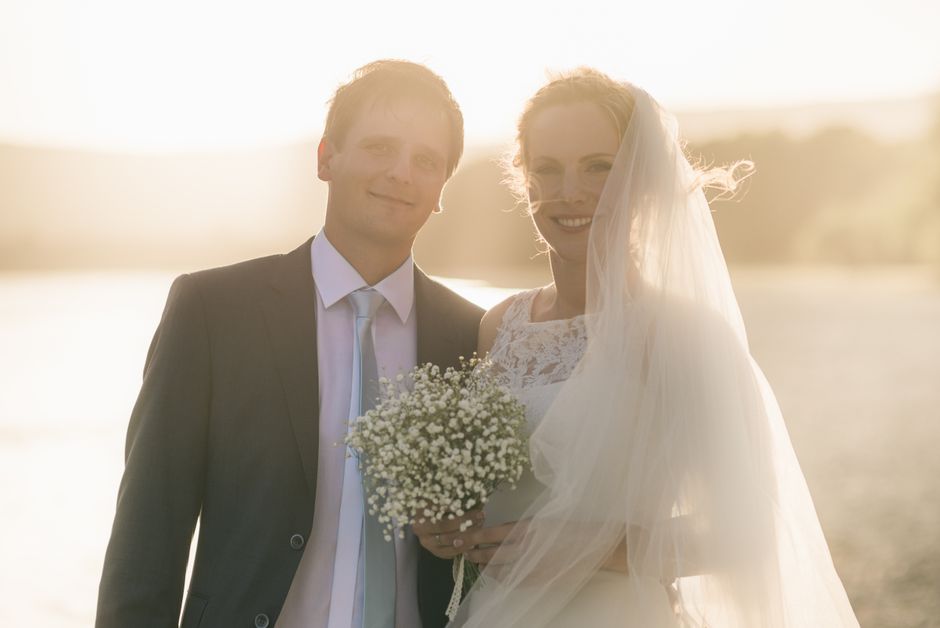
For Máire Uí Rabhartaigh, the morning of her wedding day was everything she had hoped it would be. The house was buzzing with energy, packed with aunties, cousins, sisters, and her parents all gathered together, the kind of warm, chaotic family atmosphere that makes a big day feel real before it even properly begins.
But what made Máire’s wedding stand out from countless others was a decision she and her husband made long before the big day arrived. Their church ceremony would be conducted entirely as Gaeilge, fully through the Irish language, a choice that felt deeply personal and rooted in who they are.
For many couples in Ireland, the Irish language is something that fades into the background after school, a subject sat in an exam hall and then quietly set aside. For Máire, it was the opposite. Irish was not a box to tick. It was the language of her home, her community, and ultimately, the language she wanted to mark one of the most important moments of her life.
Having the ceremony conducted through Irish was not just a cultural statement. It was about authenticity. When you are standing at the altar making promises to another person, you want those words to mean something, to feel like yours. For Máire, that meant hearing and speaking those vows in the language that felt most natural and most honest.
Gaeltacht communities across Ireland have long held Irish as the living, breathing heart of daily life rather than a relic preserved behind glass. Weddings, christenings, and funerals conducted as Gaeilge are part of that fabric, a way of carrying the language forward through the moments that matter most to families and communities.
The ceremony itself brought together family and friends, many of whom share that same connection to the language. The laughs and chats from earlier in the morning carried through into the church, the warmth of the gathered crowd making the formal occasion feel personal and alive.
For those who might wonder whether a fully Irish language ceremony creates any distance for guests less fluent in the language, Máire’s experience suggests the opposite. There is something about hearing a ceremony conducted with such intention and care that draws people in regardless of how much they follow every word. The feeling in the room matters as much as the language itself.
Irish language weddings, while still relatively rare outside Gaeltacht areas, have seen a quiet but steady growth in interest in recent years. Couples with strong connections to Irish, whether through family background, education, or personal passion, are increasingly choosing to bring the language into their ceremonies in some form, whether that means a full as Gaeilge service or simply incorporating Irish readings and vows alongside English.
Organisations promoting the Irish language have pointed to moments like these as exactly the kind of organic, community-driven use of Irish that keeps the language alive in a meaningful way. It is not about obligation or politics. It is about people choosing Irish because it genuinely reflects who they are.
For Máire, looking back on the day, it is the combination of the personal and the cultural that stays with her. The house full of family in the morning. The buzz and the laughter. And then the church, the vows, the ceremony, all of it in Irish, exactly as she had wanted it.