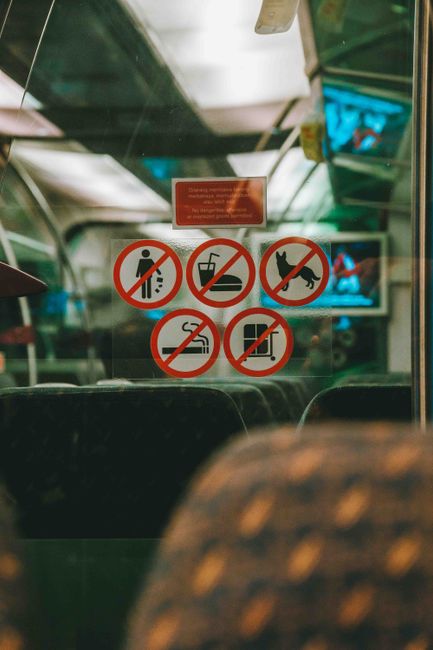
Anyone who has ever squeezed onto a packed London Underground carriage during rush hour, or sat next to someone blasting tinny music through their phone speakers on a CrossCountry train, knows that public transport can test your patience like almost nothing else. But beyond the obvious stuff, there are dozens of grey areas that leave commuters quietly fuming every single day.
So what are the rules, and how do you actually handle the awkward situations that no one really talks about?
The basics are pretty well understood. Let people off before you get on. Do not dump your bag on the seat next to you when the carriage is filling up. Stand on the right on escalators, walk on the left. Give up your seat for elderly passengers, pregnant women, or anyone who looks like they need it more than you do. Most people know this. Fewer people actually do it consistently.
But the trickier stuff is where it gets interesting.
Take manspreading. It is one of the most complained about behaviours on public transport across England, and yet confronting someone about it feels deeply uncomfortable for most people. Etiquette experts suggest a simple, polite but direct approach works best. A calm “excuse me, could you move over a bit?” is far more effective than a pointed stare or passive aggressive shuffling. Most people are not deliberately trying to annoy you. They just have not noticed.
The same logic applies to loud music. Headphones exist for a reason, and playing audio through a phone speaker in a shared space is widely considered one of the rudest things you can do on public transport. If someone near you is doing it, a quiet word is usually enough. If they ignore you, moving carriages or seats is your best option. Getting into a confrontation over it rarely ends well.
Food is another minefield. Hot, pungent food on a cramped train is deeply antisocial, and most rail operators in England actually discourage it. A sandwich is fine. A full curry or a bag of chips with vinegar is not. If you are hungry, eat before you board or stick to something that does not fill the entire carriage with a smell.
Hygiene is a more delicate subject, but it matters. If you are heading onto public transport after the gym, or on a sweltering summer day, being aware of how you smell is just basic consideration for the people around you. Equally, drenching yourself in strong perfume or aftershave is not much better for the people sitting next to you.
Backpacks are a constant source of friction, particularly on busy underground trains. The rule is simple: take it off your back and hold it, or put it on the floor. A large rucksack worn on your back effectively takes up two people’s worth of space and you will not even realise you are whacking people with it every time you turn around.
Armrests are perhaps the most fought over piece of real estate on any train or plane. The generally accepted convention is that the middle seat passenger gets both armrests, since they are already in the worst position. Window and aisle passengers have other advantages. It is not a perfect system, but it is the one most people quietly agree on.
As for putting your feet on the seats, the answer is simply no. It does not matter how tired you are, how empty the carriage is, or whether you have taken your shoes off. Seats are shared spaces and other people have to sit there.
Chatty passengers are a more nuanced problem. Some people genuinely enjoy a conversation on a long journey. Others would rather read or stare out of the window in peace. The key signals are pretty clear: headphones in means do not disturb. A book or newspaper held up means the same. If someone gives short answers and avoids eye contact, they are not being rude. They just want to be left alone, and that is entirely their right.
Priority seating is another area where people often get it wrong. Those seats near the doors exist for people who need them most. Sitting in one and then pretending to be asleep when someone elderly or disabled gets on is not a good look. Just get up.
The overarching principle behind all of this is actually quite simple. Public transport is a shared space, and the way you behave in it affects everyone around you. A little awareness and basic consideration goes a long way. England’s commuters deal with overcrowded, often delayed, and expensive services on a daily basis. The least we can do is make the experience slightly more bearable for each other.