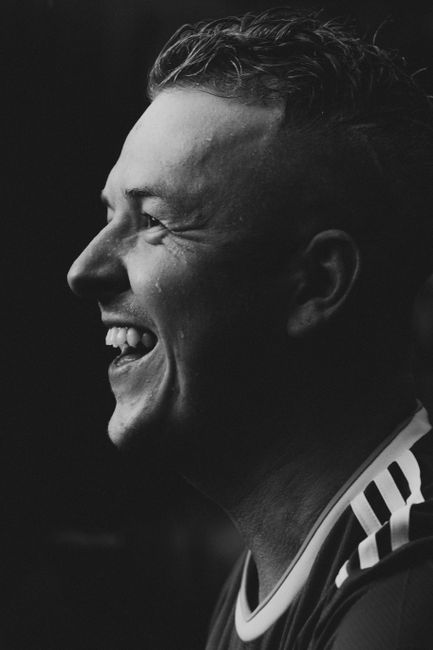
Sir Chris Hoy has spoken candidly about his personal battle with terminal prostate cancer and his determination to make sure other men do not face the same fate alone or unprepared.
The six-time Olympic cycling champion was diagnosed with stage 4 prostate cancer nearly three years ago. Since going public with his diagnosis in late 2024, Hoy has thrown himself into raising awareness about a disease that now affects more men in England than any other form of cancer. For him, this is not just a personal fight. It is a public one.
In a recent conversation, Hoy described a moment that stuck with him. He and his wife Sarra were walking through Glasgow when a stranger stopped him on the street. The man had just been diagnosed with prostate cancer and wanted to talk. Hoy did not rush off. He listened. That kind of moment, he says, is exactly why he keeps speaking out.
“They are not alone,” Hoy has said repeatedly when talking about men going through a prostate cancer diagnosis. It is a simple message but one that carries real weight coming from someone who has been living with a terminal diagnosis himself.
Prostate cancer is now the most commonly diagnosed cancer among men in England, overtaking lung and bowel cancer in recent years. Yet awareness remains patchy, screening is not yet routine, and thousands of men are still being diagnosed at a late stage when treatment options are far more limited. Hoy is one of them, and he has been open about the fact that earlier detection might have changed his own outlook.
His fundraising efforts have taken on an international flavour too. He has been working alongside Miguel Induráin, the Spanish cycling legend who won five consecutive Tour de France titles in the 1990s. The pair have combined their profiles to push the conversation about men’s cancer into new spaces and new countries, drawing attention from audiences well beyond the usual health campaign circles.
Back in England, Hoy has been in talks with Greater Manchester Mayor Andy Burnham, who he believes could play a significant role in driving forward better screening and earlier diagnosis for men across the north of England. Burnham has long been vocal about health inequality and regional health investment, and Hoy sees him as someone with both the platform and the political will to push for real change.
The case for a national prostate cancer screening programme has been debated for years. Unlike breast cancer or cervical cancer, there is currently no routine national screening for prostate cancer in England. The PSA blood test exists but it is not offered to all men as standard, partly because of concerns about false positives and unnecessary treatment. Critics of the current approach argue that this caution is costing lives. Hoy is firmly in that camp.
He has been careful not to turn his campaign into something bleak. Despite his own prognosis, Hoy talks about hope in a way that feels genuine rather than forced. He credits his family, his doctors, and his own competitive instincts for keeping him focused. The same drive that powered him to gold medals in Athens, Beijing and beyond is now channelled into something he clearly considers just as important.
Hoy has also spoken about the importance of men actually talking about their health, something that remains genuinely difficult for a lot of people. The culture around men and illness, particularly in older generations, still leans towards silence and stoicism. Getting men to go to their GP, to ask for a test, to have a conversation with their partner about symptoms, is not straightforward. Hoy’s visibility helps shift that.
He is not the first high-profile figure to use a cancer diagnosis to drive public awareness, but there is something particularly effective about his approach. He is not performing bravery. He is just being honest about what he is going through and what he thinks needs to change.
For the men who stop him on the street, or who follow his story from a distance, that honesty clearly means something. And for the campaign to improve prostate cancer screening and outcomes in England, having someone of Hoy’s stature making the argument loudly and consistently could prove to be genuinely significant.