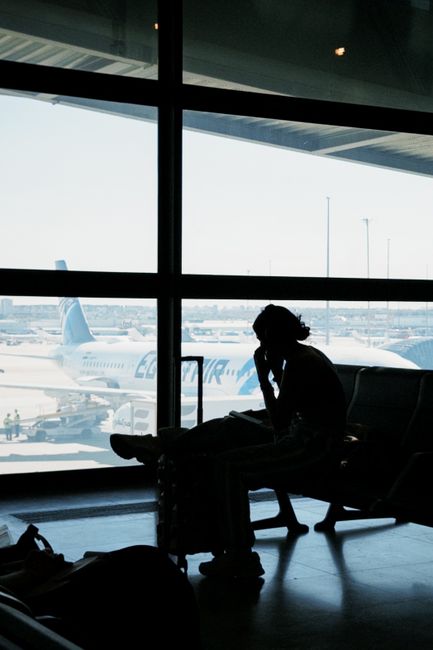
Hundreds of passengers travelling between Ireland and the UK were left stranded or facing lengthy delays after a major technical failure hit the UK air traffic control system, causing widespread cancellations and disruption across Irish airports.
The glitch, which affected the National Air Traffic Services (NATS) system in the UK, sent ripple effects straight through Irish aviation, with flights in and out of Dublin, Cork and Shannon among those impacted. Travellers heading to London, Manchester and other UK destinations found themselves stuck at departure gates or scrambling to rebook as airlines pulled flights from the schedule.
Dublin Airport was among the worst hit on the Irish side, with queues building at customer service desks as frustrated passengers tried to get answers from airline staff. Many had no idea their flight was cancelled until they arrived at the airport, with some reporting they received little or no communication from their carriers ahead of time.
Aer Lingus and Ryanair, the two biggest operators on Ireland-UK routes, both confirmed they were cancelling and delaying a number of services as a direct result of the UK system failure. Both airlines urged passengers to check their flight status online before heading to the airport and said they were working to rebook affected customers as quickly as possible.
The disruption was not limited to Irish airports. Across the UK, thousands of flights were affected, with the knock-on delays creating a backlog that aviation experts warned could take days to fully clear. Even flights that were not outright cancelled faced significant delays as air traffic controllers worked to manually process flight plans, a time-consuming process that drastically reduced the number of aircraft that could be handled at any one time.
For many Irish passengers, the timing could not have been worse. The disruption hit during a busy travel period, with families on summer holidays and business travellers caught in the middle of the chaos. Some passengers reported waiting for hours at airports with little information, while others who had already boarded aircraft were told to disembark and wait for updates.
Travel industry insiders pointed out that passengers whose flights are cancelled are entitled to rebooking or a full refund under EU air passenger rights rules, which still apply to flights departing from Irish airports regardless of Brexit. However, getting airlines to process those claims quickly during a mass disruption event is often easier said than done, and consumer groups were already advising travellers to keep all receipts for any extra costs they incur, such as meals or overnight accommodation, as these may be claimable.
NATS issued a statement acknowledging the technical issue and said engineers were working urgently to resolve the problem. The company did not give a specific timeline for when full services would be restored, which only added to the uncertainty for airlines trying to plan their operations for the hours and days ahead.
The incident has once again raised questions about the resilience of critical aviation infrastructure and how quickly a single technical failure in one country can cascade into a continent-wide travel crisis. Ireland, given its heavy reliance on UK air corridors for transatlantic and European connectivity, is particularly exposed when things go wrong on that side of the Irish Sea.
Anyone due to travel on an affected route was strongly advised to contact their airline directly, avoid unnecessary trips to the airport until their flight status is confirmed, and hold onto any documentation related to extra expenses caused by the disruption.