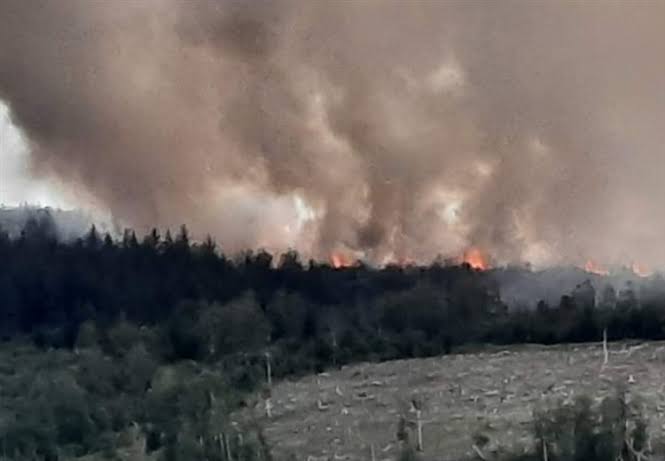
Firefighters and land management crews are continuing their efforts to contain a significant wildfire burning across the Cairngorms National Park, as the blaze entered its fourth consecutive day with no immediate signs of being fully extinguished.
Authorities overseeing the response have confirmed that the town of Aviemore is no longer considered to be in the immediately affected area of operations, offering some reassurance to residents and businesses in one of Scotland’s most popular Highland tourist destinations. However, crews remain on the ground and the situation continues to be closely monitored.
The Cairngorms National Park, which covers an area of over 4,500 square kilometres and is the largest national park in the United Kingdom, is home to vast stretches of heather moorland, ancient Caledonian pine forest, and some of Scotland’s most precious and fragile ecosystems. Wildfires in this kind of terrain can be notoriously difficult to control, with dry conditions, wind direction changes, and the dense nature of moorland vegetation all contributing to the challenge facing firefighting teams.
Scottish Fire and Rescue Service crews have been working alongside land managers and national park rangers since the fire first broke out, deploying both ground-based teams and aerial resources to tackle the blaze. The scale of the operation reflects the seriousness with which authorities are treating the incident, particularly given the ecological sensitivity of the affected landscape.
Wildfires in Scotland have become an increasing concern in recent years, with climate scientists warning that rising temperatures and prolonged dry spells are creating conditions that make such incidents more frequent and more intense. The Cairngorms region, while typically associated with cold and wet Highland weather, has experienced periods of unusually dry conditions that leave moorland vegetation vulnerable to ignition.
The impact on wildlife in the affected area is expected to be significant. The Cairngorms supports populations of red squirrels, capercaillie, ospreys, and red kites, along with a wide range of other protected species that depend on the park’s unique habitats. Conservation organisations are likely to be assessing the damage once the fire is fully under control, with restoration efforts potentially required across affected sections of moorland and forest.
Local communities have been keeping a close watch on developments throughout the incident. Aviemore, which serves as a gateway to the Cairngorms and relies heavily on tourism, had faced uncertainty over recent days as the fire burned in its vicinity. The confirmation that the town is no longer in the immediately affected zone will come as welcome news to residents, hotel operators, and outdoor businesses who depend on the area’s reputation as a safe and accessible destination for visitors.
Hikers, cyclists, and other outdoor enthusiasts have been urged to follow any access restrictions put in place by park authorities during the firefighting operation. The Cairngorms attracts hundreds of thousands of visitors each year, and maintaining public safety while managing such an incident presents an additional layer of complexity for those coordinating the response.
The cause of the fire has not yet been publicly confirmed, and investigations into how the blaze started are expected to follow once it has been brought fully under control. Moorland fires in Scotland can be sparked by a range of factors, including lightning strikes, accidental ignition, and in some cases deliberate acts. Controlled burning, or muirburn, is a traditional land management practice in parts of the Highlands, though it is subject to strict regulations and seasonal restrictions designed to protect wildlife and prevent fires from spreading beyond intended boundaries.
Scottish Government ministers and national park officials are expected to provide further updates as the situation develops. The incident has once again brought the issue of wildfire risk in Scotland into sharp focus, with calls from some environmental groups for greater investment in prevention, early detection systems, and firefighting resources capable of responding to large-scale incidents in remote and rugged terrain.
For now, the priority remains containing the blaze and protecting both the communities and the extraordinary natural environment that make the Cairngorms one of Scotland’s most treasured landscapes. Crews are expected to remain at the scene for the foreseeable future as they work to ensure the fire does not spread further across the park.
Devastating to see this still going. The Cairngorms are such a special place and four days of this must be doing serious damage to the habitat and wildlife up there. Hope the crews are staying safe, it looks absolutely brutal conditions to be working in.