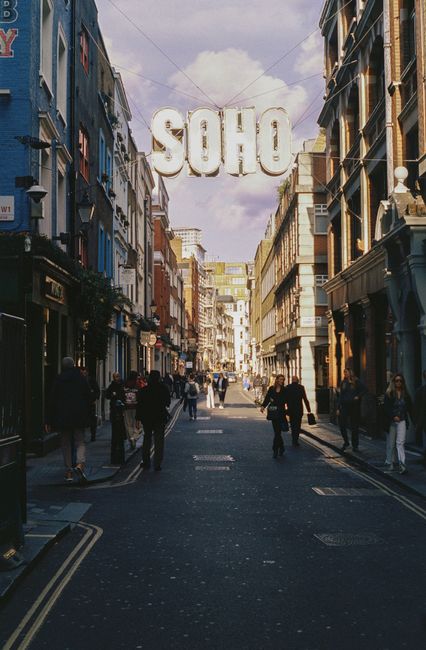
Tucked between a strip club, a West End theatre and a bustling pub, Soho Parish Church of England Primary School is not your typical place of learning. Yet for decades this small, resilient institution has educated the children of one of London’s most vibrant and chaotic neighbourhoods, producing generations of pupils who grew up with the sights, sounds and stories of the capital’s most famous square mile as their classroom backdrop.
Now, however, the school faces an uncertain future. Falling pupil numbers, a legacy of the post-Covid exodus from central London, have left Soho Parish fighting for survival. And with it, supporters warn, goes something irreplaceable at the very heart of the city.
“Without this school, it’s all just tourists,” said one parent who has two children currently enrolled. “This place is what makes Soho a real community rather than just an entertainment district. If it closes, something genuinely precious disappears.”
Soho Parish holds a remarkable distinction. In an area that once boasted 16 schools serving a dense residential population, it is now the last one standing. The gradual disappearance of its predecessors over the decades reflected wider demographic shifts, as families moved to the suburbs and inner-city housing became increasingly dominated by businesses, hotels and short-term lets. The pandemic accelerated that trend sharply, prompting many of the remaining families with young children to leave central London altogether in search of more space and greenery.
The result has been a dramatic decline in pupil numbers that has left the school financially vulnerable. Across England, education experts have warned that hundreds of primary schools face closure over the coming years as birth rates fall and urban populations shift. Soho Parish finds itself at the sharp end of that national crisis, its small size making it particularly exposed to the funding pressures that come with reduced roll numbers.
Yet the school’s supporters are refusing to accept its fate quietly. A coalition of parents, local residents, community organisations and prominent figures connected to the neighbourhood has come together to fight for its future, armed with what they describe as ambitious plans to secure the school’s long-term viability.
Central to their campaign is an argument about what schools actually do for urban communities beyond simply educating children. Soho, they point out, is a neighbourhood with a genuine and longstanding residential population, one that has historically included artists, musicians, workers in the hospitality trade and families who have lived in the area for generations. A primary school, they argue, is not merely a service but an anchor, the institution around which community life organises itself.
“When you have a school, you have parents who know each other, children who play together, a reason for families to stay and invest in a place,” explained a local councillor who has been involved in efforts to support the school. “Take that away and you accelerate the process of turning Soho into somewhere people visit but nobody actually lives.”
The plans being developed by the school’s supporters include proposals to expand the school’s community role, potentially opening its facilities to a wider range of local organisations and activities outside of school hours. There are also discussions about whether the school could attract additional funding by positioning itself as a unique educational resource, one that draws on its extraordinary location to offer pupils experiences and connections unavailable anywhere else in the country.
The school’s headteacher has spoken about the distinctive character of a Soho Parish education, describing how pupils grow up with an unusually sophisticated understanding of London’s cultural life, benefiting from proximity to theatres, galleries and the extraordinary mix of people who pass through the neighbourhood every day.
For now, the school remains open and its staff remain committed. But the clock is ticking. Education authorities will need to see evidence that pupil numbers can be stabilised or increased if the school is to secure its future beyond the near term. Campaigners are hoping that a combination of community engagement, creative programming and renewed efforts to attract local families back to central London living can turn the tide.
The broader question hanging over the campaign is whether cities like London can maintain genuine residential communities at their cores, or whether economic pressures will inevitably hollow them out, leaving behind only offices, hotels and visitor attractions. Soho Parish Primary School has become, almost by accident, a symbol of that much larger struggle.
“This school has survived for this long because people have always understood what it means,” said one long-term local resident. “We are not giving up on it now.”
Really sad to read this. My kids went to a primary in a similar situation a few years back and the uncertainty was awful for the whole community. These small schools are the heart of a neighbourhood, once there gone they don’t come back.
Really sad to see this happening. Soho needs a local school for local families, otherwise the whole community just becomes flats and bars with no actual *life* to it. Once its gone you wont get it back, these things never come back.
This breaks my heart honestly. Soho is already losing so much of what made it special and now the school too? Kids who grow up in central london deserve a local school, not a commute across the city. Hope the council actually listens for once instead of just nodding along and doing nothing.