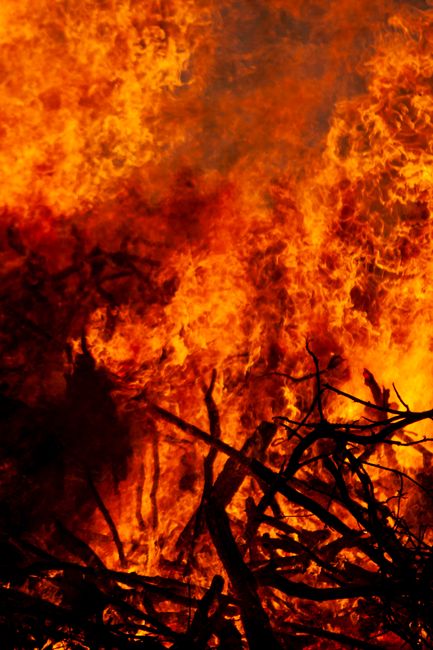
Emergency 999 calls made during a major wildfire in the Midlands were diverted to a control room in London, raising serious questions about fire service capacity and response times in England.
The revelation has sparked fresh concern about how stretched the fire service has become, with crews and control infrastructure struggling to cope when large incidents hit. During the wildfire, callers in the Midlands found their emergency calls being handled by operators hundreds of miles away in the capital rather than by local teams with direct knowledge of the area.
The Fire Brigades Union has used the incident to ramp up pressure on fire service bosses, pointing to a dramatic decline in crew numbers since 2008. The union argues that years of cuts have left the service dangerously thin on the ground, and that incidents like this wildfire are exposing just how fragile the system has become.
Wildfires have become an increasingly serious problem across England in recent years. Dry summers and stretches of open moorland and grassland have created conditions where fires can spread rapidly, demanding fast, coordinated responses from fire crews. When those responses are delayed or complicated by overstretched control rooms, the consequences can be severe.
The diversion of calls to London is not just a logistical footnote. Control room operators play a crucial role in coordinating the response to major incidents, directing crews, managing resources and keeping communication lines clear. Having that function handled remotely, by operators unfamiliar with local geography and local units, adds an extra layer of difficulty at exactly the moment when speed and precision matter most.
The Fire Brigades Union has been vocal for years about what it describes as a systematic hollowing out of the fire service. Since 2008, firefighter numbers across England have fallen significantly, with budget pressures forcing services to cut posts, close stations and reduce the number of engines available at any given time. The union says fire bosses and the government have repeatedly been warned that these cuts would eventually lead to situations where the service cannot cope.
This latest incident gives those warnings a very concrete example to point to.
Fire service leaders have faced criticism from the union not just over the numbers but over how decisions about cuts have been made. The union argues that frontline crews and their representatives have been sidelined while managers and officials have pushed through reductions that look acceptable on paper but create real danger in practice.
For residents in the Midlands, the idea that their 999 call during a wildfire was being answered in London rather than locally is likely to feel unsettling. It raises obvious questions about what happens if communication breaks down, if local knowledge is needed quickly, or if multiple large incidents hit at the same time.
Wildfires are no longer a rare event in England. Climate patterns have shifted enough that fire services are now expected to deal with them as a regular seasonal risk rather than an occasional outlier. That makes the question of capacity and resources even more pressing. A service that was designed and funded for a different era is now being asked to handle threats that are growing in frequency and scale.
The government has faced repeated calls to review fire service funding and to take the union’s concerns about crew numbers seriously. So far, critics say, the response has not matched the scale of the problem.
With wildfire season far from over and summer conditions capable of returning quickly, the pressure on fire services across England is not going away. The Midlands incident may well become a key reference point in the ongoing argument about whether England’s fire service is properly equipped to keep people safe.