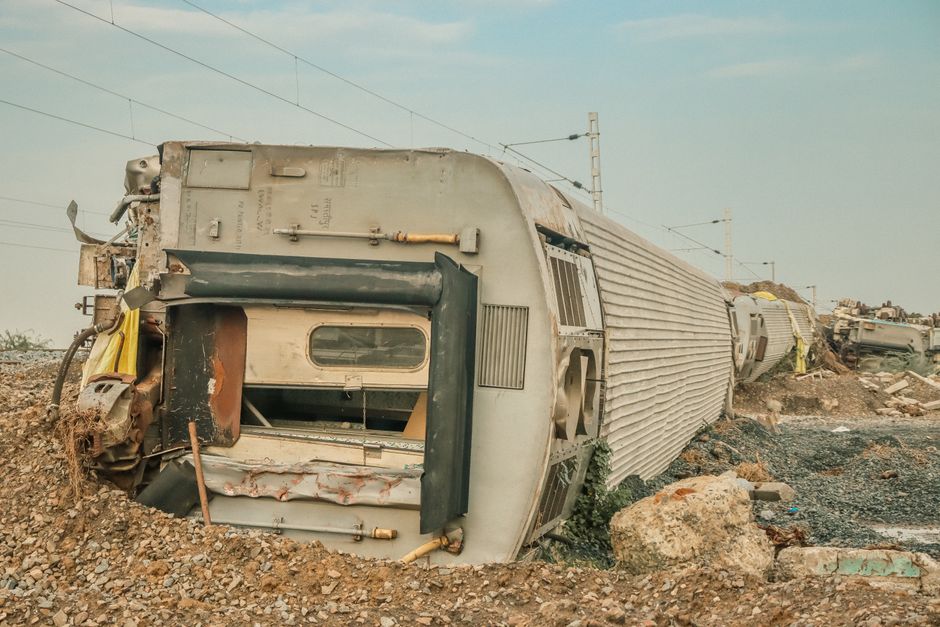
Investigators looking into a train derailment near Lewes have found a track defect close to where the incident happened, an initial report has revealed.
The Rail Accident Investigation Branch (RAIB) has published its early findings after examining the site, pointing to an “irregularity” in the track as a key area of focus in the ongoing probe.
The derailment prompted immediate concern about the condition of the railway infrastructure in the area, and the discovery of a fault so close to the scene will likely raise serious questions about how it was missed during routine maintenance checks.
The RAIB is the independent body responsible for investigating rail accidents and serious incidents across Britain. Its role is not to assign blame but to establish what went wrong and why, with the aim of preventing similar incidents from happening again. The initial report marks the first official step in what is expected to be a thorough and detailed investigation.
While full details of the defect have not yet been released, the identification of a track irregularity this early in the process suggests it could be a significant factor in explaining what caused the derailment. Engineers and safety specialists will now work to determine how long the fault had been present, whether it should have been detected sooner, and what impact it had on the train involved.
Lewes, a market town in East Sussex, sits on a busy rail corridor used by commuters and travellers moving between London and the south coast. Any disruption or safety concerns on this stretch of line have a knock-on effect for a large number of passengers.
Network Rail, which is responsible for maintaining the track, is expected to cooperate fully with the RAIB investigation. The findings could have wider implications for how track inspections are carried out across the network, particularly on older sections of line that see heavy daily use.
Passenger safety groups are likely to be watching the investigation closely. In recent years there has been growing scrutiny of how well Britain’s ageing rail infrastructure is being maintained, with concerns that budget pressures and staffing shortages in maintenance teams could be contributing to faults going undetected for longer than they should.
The RAIB has said further updates will follow as the investigation progresses. A full report, which will include detailed recommendations, is expected to be published at a later stage once all the evidence has been properly analysed.
For now, the focus remains on understanding the full picture of what happened near Lewes and making sure lessons are learned before something more serious occurs on this or any other part of the network.