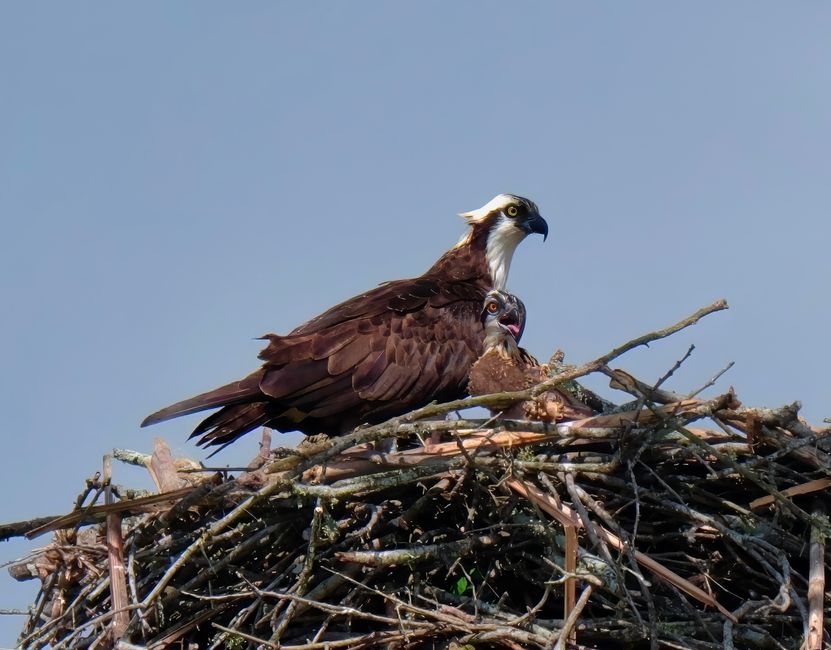
Two osprey chicks have hatched on Anglesey this summer in what conservationists are calling a landmark moment for wildlife in Wales. It marks the first time the birds have successfully bred on the island, raising hopes that the species is continuing to establish itself across the country after years of absence.
The chicks were born earlier this summer at an undisclosed location on Anglesey, with experts keeping a close eye on the nest throughout the breeding season. Conservation groups involved in monitoring the birds say the successful hatching is a significant step forward for osprey recovery efforts in Wales.
Ospreys were once wiped out across the UK, driven to extinction by hunting and egg collecting. Their slow comeback has been one of the more remarkable wildlife stories in Britain over recent decades, with populations gradually rebuilding in Scotland before spreading further south into Wales and England.
Wales has seen growing osprey activity over recent years, with pairs spotted nesting in mid Wales around the Dyfi estuary, where a dedicated project has been running for some time. But Anglesey producing chicks for the first time adds a whole new dimension to that recovery story.
The two young birds will now face their biggest challenge. As the seasons change, they will begin the long and gruelling migration south to west Africa, a journey of thousands of miles that young ospreys make alone, without guidance from their parents. Many do not survive the first migration, making it one of the most dangerous periods in the birds lives.
Conservationists are hopeful, though. If the chicks make it through the winter and successfully reach their African wintering grounds, there is every chance they could return to Wales in the coming years. Ospreys typically come back to breed near where they were born, which means Anglesey could become an established breeding site for the species going forward.
That prospect has excited local wildlife groups, who see this as a genuine turning point. Having ospreys breed successfully on Anglesey is not just good news for the birds themselves but for the wider ecosystem and for wildlife tourism on the island.
Ospreys are spectacular hunters, diving feet first into water to catch fish with their taloned grip. They are a draw for birdwatchers and nature lovers, and established nest sites in Wales have previously brought significant visitor interest to rural areas.
Experts will be tracking the chicks movements where possible and are urging the public to report any sightings of tagged or ringed birds. They are also asking people to keep their distance from known osprey areas to avoid disturbing any remaining activity at the nest site as the young birds prepare to leave.
The hope now is simple. That both chicks make it safely to Africa, survive the winter, and one day find their way back to the Welsh coastline where their story began.