Scotland’s most iconic landscapes are burning, and campaigners say the country can no longer treat climate change as something to worry about down the line.
Wildfires tearing through areas around Arthur’s Seat in Edinburgh and deep into the Cairngorms have pushed emergency services to their limits in recent weeks, with crews battling blazes across terrain that would rarely have seen this kind of sustained fire activity in previous decades.
For those who have long been sounding the alarm on climate change, these fires are not a warning sign of things to come. They are proof that the crisis is already here.
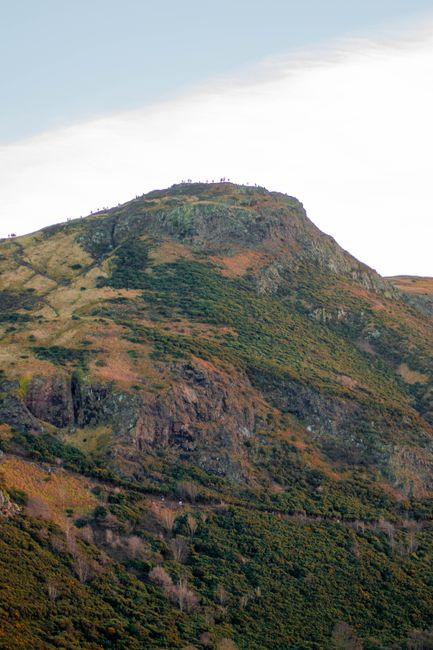
Arthur’s Seat, the ancient volcano that sits at the heart of Edinburgh and draws thousands of walkers every year, has seen fire crews deployed repeatedly as dry conditions and rising temperatures turn the hillside vegetation into a tinderbox. The sight of smoke rising above one of Scotland’s most recognisable landmarks has rattled residents and visitors alike, many of whom have never seen anything like it before.
Up in the Cairngorms, the situation has been just as serious. The national park, home to rare wildlife and some of the most remote countryside in Britain, has seen fires spread across moorland and hillside, threatening habitats that take decades to recover. The heather and peat that define so much of the Scottish uplands are particularly vulnerable, and once peat catches fire it can burn for days or even weeks underground, making it incredibly difficult to extinguish.
Climate campaigners have pointed to the pattern of these fires as evidence that Scotland’s weather is shifting in ways that are becoming impossible to ignore. Longer dry spells, warmer springs and reduced rainfall in key months are creating conditions that simply did not exist here with the same regularity a generation ago. Scotland has always had wildfires, but not like this, and not this often.
Emergency services have done a remarkable job responding to the blazes, but the pressure is mounting. Fire crews are being stretched across multiple incidents, and there are real questions being asked about whether Scotland’s firefighting resources are properly equipped for a future where this kind of activity becomes the norm rather than the exception.
Conservationists have raised particular concern about the long-term damage being done to Scotland’s natural environment. The Cairngorms is home to species found nowhere else in the UK, including red squirrels, capercaillie and Scottish wildcats. Repeated fires and the habitat destruction that follows could have a devastating impact on populations that are already under pressure.
The peatlands of Scotland store enormous amounts of carbon built up over thousands of years. When they burn, that carbon is released back into the atmosphere, creating a feedback loop that makes the underlying climate problem even worse. Protecting peatlands has become a key part of Scotland’s climate strategy, but wildfires threaten to undo years of restoration work in a matter of hours.
Campaigners are calling on the Scottish Government to treat this as the emergency it is. They want more investment in land management, better early warning systems for wildfire risk, and a serious conversation about how land in Scotland is used and maintained. Some have pointed to the role of grouse moor management in creating conditions that can make fires worse, an argument that has been disputed by land managers but which is gaining traction in the broader debate.
The Scottish Government has acknowledged the growing threat of wildfires and pointed to its existing climate commitments, but critics argue that warm words are not enough when the hills are literally on fire.
For people living near affected areas, the reality is stark. Communities close to the Cairngorms have had to deal with smoke, disruption and in some cases genuine fear about how close the fires have come. In Edinburgh, the fires on Arthur’s Seat have served as a visceral, visible reminder that climate change is not an abstract concept but something that can show up on your doorstep.
Scotland has built a reputation as a country that takes environmental issues seriously, and the ambition around net zero targets has been genuine. But ambition and action are two different things, and the wildfires burning across the country’s most treasured landscapes are making that gap harder to ignore.