There is a version of England that certain people like to imagine when they think about the countryside. Rolling hills, country pubs, and a very particular kind of person walking through it all. A recent trip to the Peak District suggests that picture is well out of date.
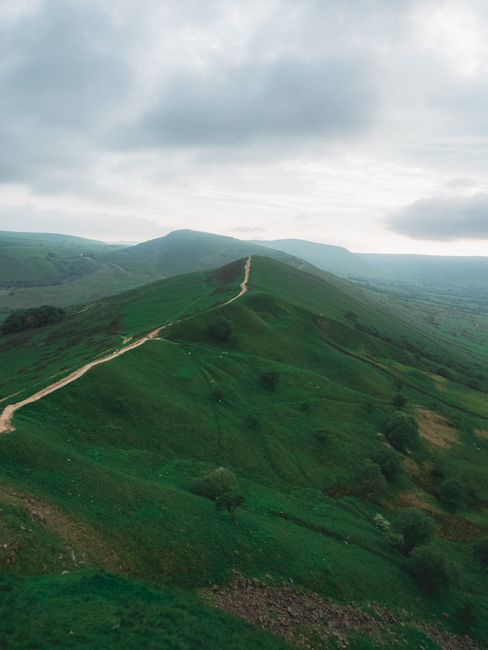
A family visit to the national park during a warm summer spell turned into something of an eye-opener. Starting with the climb up Mam Tor, a well-loved peak in Derbyshire that draws in everyone from serious hikers to first-timers just after a decent view, the scene at the top told its own story about modern England.
Women wearing hijabs were picnicking on the rocks. Groups of young men from mixed backgrounds were racing each other up the path. Solo runners, older dog walkers, families with young kids all sharing the same ridge on the same sunny afternoon. Not a curated diversity event. Just a Tuesday in the Peak District.
It matters because country walking has for a long time had a reputation as one of the whitest leisure activities going. The image of the British rambler, rucksack on back and Ordnance Survey map in hand, has rarely reflected the full picture of who actually lives in England. Access to green spaces, the cost of getting there, and a subtle but real sense that certain places are not really for certain people have all played a role in keeping that gap in place.
But the Peak District sits within easy reach of both Manchester and Sheffield, two of England’s most diverse cities. And that geography appears to be reshaping who shows up on the trails. What was once a fairly homogenous weekend pursuit is looking increasingly like a genuine cross-section of the country.
This is not a small thing. The debate about who feels welcome in rural England has been rumbling for years. Organisations like Black to Nature and Muslim Hikers have been doing the hard work of encouraging people from underrepresented communities to get outside, challenging the idea that the countryside is someone else’s territory. The scenes on Mam Tor suggest that work is starting to show results.
There is also a broader political dimension to all of this. At a time when certain voices on the right like to invoke the English landscape as a symbol of a particular, narrow national identity, the reality on the ground is something else entirely. The hills and moors are not the exclusive property of any one group. They belong to everyone, and more people are starting to act like it.
Youth hostels, which were themselves founded on the radical idea that ordinary working people deserved access to the countryside, are still playing their part. Affordable accommodation in national parks makes a real difference to who can actually afford to visit. It is easy to forget that access to nature has never been purely a matter of geography. Cost, confidence, and cultural familiarity all shape who ends up on a hillside and who stays home.
The Peak District is England’s most visited national park, pulling in millions of people every year. For a long time, the debate around it focused on footpath erosion, parking problems, and the tension between tourism and local communities. Those issues have not gone away. But the changing face of who is walking those paths deserves just as much attention.
England is a more complicated, more interesting place than the version that gets wheeled out in certain political arguments. The countryside is part of that. Mam Tor on a summer afternoon, packed with people of every background sharing the same view, is as good a rebuttal as any to the idea that there is only one kind of person who belongs here.
The question now is whether that shift becomes the norm across more of rural England, not just the peaks and moors closest to big cities. That means investment in transport links, affordable places to stay, and continued outreach to communities that have historically felt shut out. The view from the top is worth it. More people should get the chance to see it.