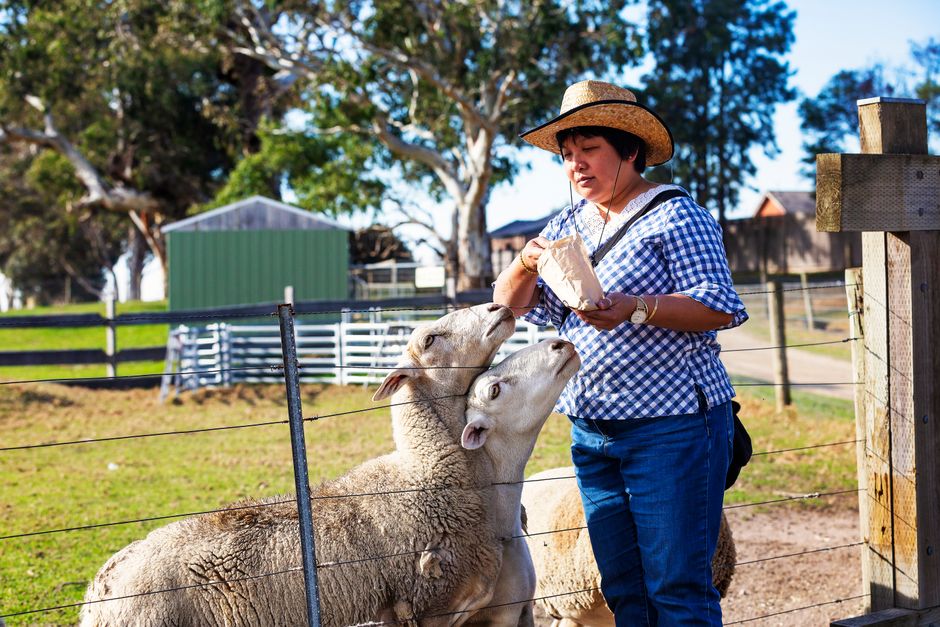
A Welsh wool farmer who launched a fundraising appeal to help feed her struggling sheep has found herself at the centre of an online storm after critics spotted her buying a coffee and croissant while the campaign was still running.
Zina, who keeps 100 Icelandic sheep, started the appeal after the hot weather and ongoing drought left her seriously short of feed for her flock. Like many farmers across Wales this summer, she has been battling the effects of dry conditions that have hammered grass growth and pushed up the cost of hay and feed.
But instead of sympathy, Zina found herself on the receiving end of a wave of criticism from people who felt she had no business asking the public for money while spending anything on herself. The sight of her purchasing a coffee and a croissant was enough to set off a pile-on, with some questioning whether the fundraiser was genuine or necessary at all.
It is a situation that will feel familiar to anyone who has ever run a crowdfunding campaign or asked for help during hard times. The moment you are seen spending even a small amount on yourself, some people decide your struggle cannot be real. A coffee becomes evidence of fraud. A croissant becomes proof you are taking the public for a ride.
For farmers, this kind of scrutiny can feel particularly brutal. Farming is already one of the most financially precarious and mentally demanding ways to make a living. Welsh farmers have faced a brutal combination of pressures in recent years, from rising feed and fuel costs to difficult weather patterns that make planning almost impossible. A dry spell that kills off pasture does not give a farmer a few weeks notice. The animals still need feeding whether the grass grows or not.
Icelandic sheep are a hardy breed, but even they need proper nutrition to stay healthy, especially during periods of heat and drought when grazing land dries out and offers little value. Keeping 100 animals fed through a difficult summer is not cheap, and many smaller and independent farmers simply do not have the cash reserves to absorb those kinds of unexpected costs.
The criticism Zina received highlights a wider problem with how the public sometimes views farmers who ask for help. There is an expectation in some quarters that anyone running a fundraiser must live like a monk for the duration of the campaign, denying themselves even the most basic small pleasures to prove their need is legitimate. It is a standard that would be considered unreasonable in almost any other context.
Supporers of Zina pushed back hard against the criticism, pointing out that buying a coffee does not mean someone is not also struggling to cover larger bills. Running a farm is expensive in ways that are not always visible to people outside the industry, and the idea that farmers should have to justify every small personal purchase while trying to keep their animals alive says more about the critics than it does about her.
The story has sparked a broader conversation about how farming communities are treated when they reach out for support, and whether the public really understands the financial reality of keeping livestock in increasingly unpredictable weather conditions. Wales has seen some notably dry and hot periods recently, and farmers across the country have been warning that the cost of keeping animals fed through these spells is becoming unsustainable without outside help.
For Zina, the hope is that the fundraiser does what it was meant to do and helps her get her flock through the summer. Her sheep, whatever the online commenters might think, still need feeding.