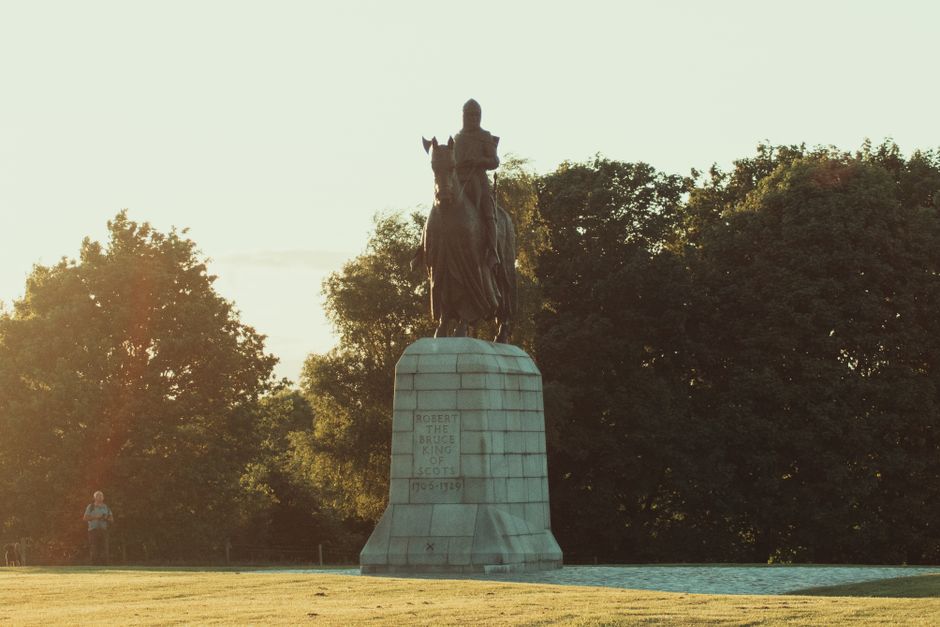
The church where Robert the Bruce is buried could soon be managed by the state, after the Church of Scotland asked Historic Environment Scotland to consider taking it into their care.
Dunfermline Abbey Kirk, one of Scotland’s most historically significant buildings, has been at the centre of discussions about its long-term future. The Church of Scotland has formally approached Historic Environment Scotland about the possibility of the state body taking over responsibility for the ancient site.
The abbey has deep roots in Scottish history. Robert the Bruce, the king who led Scotland to victory at the Battle of Bannockburn in 1314, is buried beneath the pulpit. His tomb has drawn visitors from across the world for centuries, making the kirk far more than just a local place of worship.
Dunfermline itself was once the capital of Scotland, and the abbey complex was a powerhouse of medieval religious and political life. Kings and queens were crowned and buried there, cementing its place as one of the most important sites in the entire country.
The move to potentially hand over the building to Historic Environment Scotland reflects the growing financial and practical pressures facing the Church of Scotland. Maintaining ancient stone buildings of this scale is enormously expensive, and congregations across Scotland have been shrinking for years. The Church has been managing an increasingly difficult balancing act between keeping historic kirks open and finding the money to maintain them properly.
Historic Environment Scotland already looks after a number of significant Scottish sites, including Edinburgh Castle, Stirling Castle, and the ruins of Dunfermline Abbey itself, which sits right next to the active kirk. The nave of the old abbey, a stunning piece of Romanesque architecture, has been in state care for years. It would make geographic and practical sense for the adjoining church to follow suit.
For the local community in Dunfermline, the news will raise questions about what a change in management might mean for regular worship and community use of the building. Historic Environment Scotland sites are primarily visitor attractions, and any transition would need to carefully consider how the building continues to serve the congregation that still meets there.
The proposal is still at an early stage. Historic Environment Scotland has been asked to consider the option, but no final decisions have been made. Talks are expected to continue as both organisations work out whether a handover is practical and what form it might take.
What is clear is that the long-term future of the building needs to be secured. Dunfermline Abbey Kirk is not just a church, it is a cornerstone of Scottish national identity. Letting it fall into disrepair would be unthinkable, and finding a sustainable model for its care is a priority that goes well beyond the concerns of any single congregation.
Scotland has faced this challenge with a number of its most treasured historic kirks in recent years. The question of who pays for the upkeep of buildings that belong, in a cultural sense, to the whole nation is one that has no easy answer. But with Robert the Bruce’s resting place at stake, the pressure to get it right has rarely felt more acute.
Honestly think this is probably for the best. These old buildings cost an absolute fortune to maintain and at least the state has the resources to keep it standing. Would be a shame to see it fall apart just because a small congregation can’t afford the upkeep.