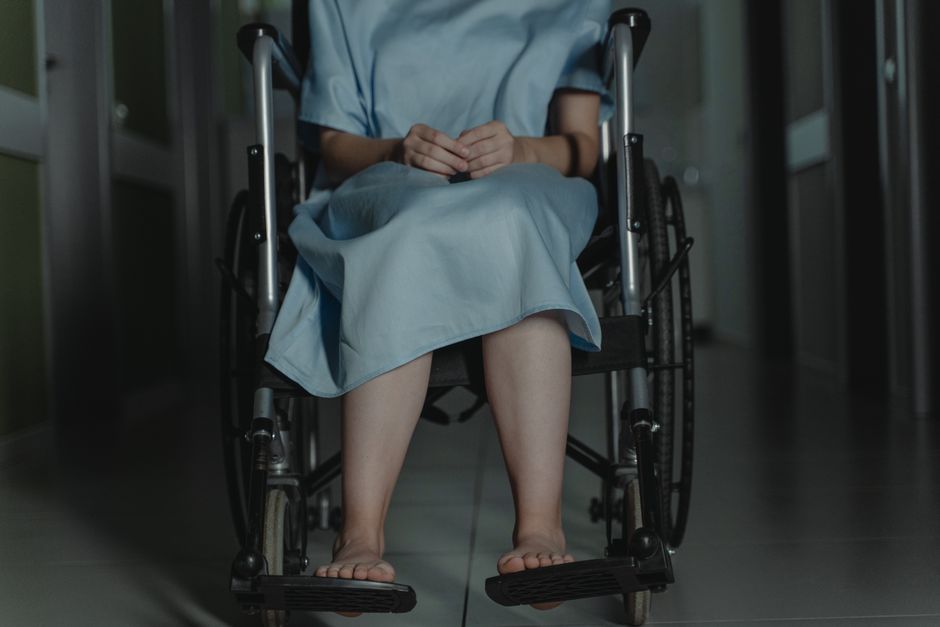
A Wrexham man has spoken out after his vulnerable wife walked out of a hospital unnoticed, still attached to a medical tube, and was found alone in the car park.
Julia Dutton had been receiving treatment at Wrexham Maelor Hospital when she managed to leave the ward without a single member of staff noticing. She was later found outside in the car park, a cannula still inserted in her arm.
Her husband says the incident has left him shaken and angry. He trusted the hospital to look after Julia, who he describes as vulnerable, and believes the basic duty of care simply was not there on the day.
A cannula is a small tube inserted into a vein, typically used to deliver medication or fluids directly into the bloodstream. Walking around with one still attached, unsupervised and outside a hospital building, carries obvious risks, including infection, injury or the tube being pulled free.
The fact that Julia made it all the way out of the ward, through the building and into the car park without anyone raising the alarm raises serious questions about how closely patients were being monitored that day.
Her husband says he wants answers from the hospital. How did she get so far without anyone noticing? Why was there no system in place to flag that a patient had left the ward? And what is being done to make sure this does not happen to someone else?
Wrexham Maelor is run by Betsi Cadwaladr University Health Board, the largest health board in Wales. The hospital serves a wide area of north Wales and sees thousands of patients every year.
Patient safety on wards, particularly for those who may be confused, unwell or vulnerable, is a longstanding concern across NHS Wales. Staffing pressures have been widely reported, and many nurses and healthcare workers have spoken publicly about being stretched too thin to keep a close eye on every patient at all times.
But for families like the Duttons, those pressures offer little comfort when something goes wrong with someone they love.
Julia was found safe, but the experience has clearly taken a toll. Her husband says the whole ordeal was distressing for her and for the family, and that they deserve a proper explanation rather than vague reassurances.
The case highlights a wider issue around the monitoring of vulnerable patients in busy hospital environments. When someone is deemed vulnerable, the expectation from families is that extra care will be taken. When that does not happen, the fallout goes beyond the physical risk. It damages trust in the very institutions people rely on during some of the most difficult moments of their lives.
Betsi Cadwaladr University Health Board has faced scrutiny on multiple occasions in recent years over patient care standards. The health board spent years under special measures before being removed from that status, though concerns about performance and patient safety have continued to surface.
It is not yet clear whether a formal complaint has been lodged or whether the health board has launched an internal review into what happened to Julia. But her husband is determined to make sure the incident does not simply get swept under the rug.
For now, the family is left dealing with the aftermath of a day that should never have unfolded the way it did.