
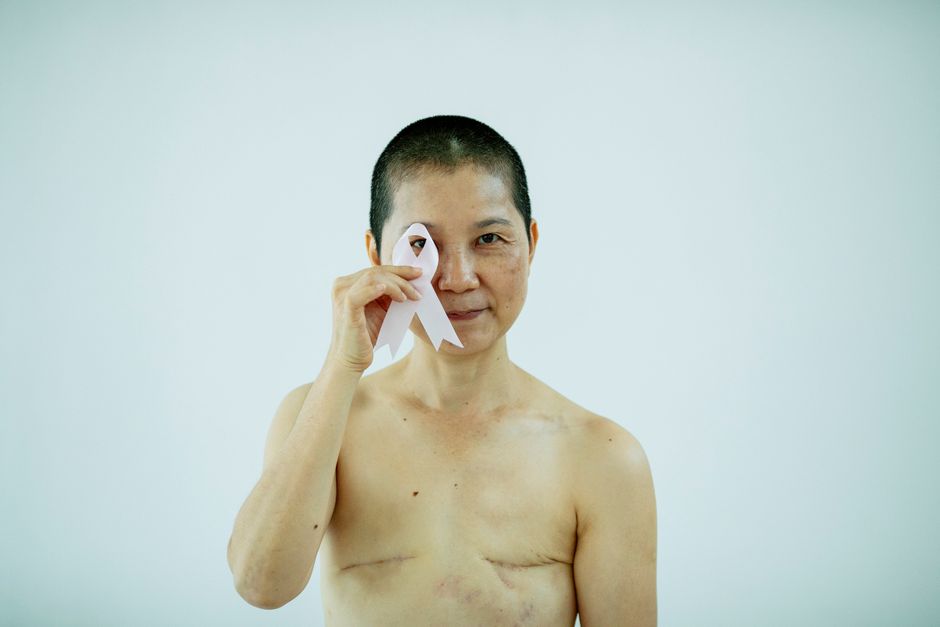
A mother from Buckinghamshire is fighting for her life after repeatedly being told she was too young to qualify for NHS breast cancer screenings, despite having a significant family history of the disease.
Chantelle Van Der Watt, who has watched multiple family members battle cancer throughout her life, was denied access to routine breast cancer screenings because she fell below the NHS age threshold. Now, the devastating consequences of that decision are playing out in the most heartbreaking way imaginable, as Chantelle faces a terminal diagnosis that she believes could have been caught far earlier.
The NHS currently invites women for routine breast cancer screenings between the ages of 50 and 71, with some higher-risk patients referred for earlier checks through specialist genetic programmes. However, campaigners and medical professionals have long argued that the criteria for accessing early screening remains too rigid, leaving younger women with strong family histories of cancer dangerously exposed.
Chantelle’s case has reignited fierce debate about whether the current screening framework is fit for purpose, and whether women with clear hereditary risk factors are being failed by a system that prioritises age over individual medical history.
“I knew something was wrong. I knew my family history put me at risk,” Chantelle said. “But every time I raised my concerns, I was told I was too young to worry about it. I was sent away. Now I am dying, and I cannot help but think that if someone had listened to me sooner, things could have been very different.”
Breast cancer remains the most common cancer in the UK, with around 55,000 new cases diagnosed every year. While survival rates have improved dramatically over recent decades, early detection remains the single most critical factor in determining outcomes. Cancers caught at the earliest stage have a survival rate of more than 90 percent, compared to significantly lower rates when the disease is detected at a later, more advanced stage.
Family history is one of the most well-established risk factors for breast cancer. Women who have first-degree relatives, such as a mother or sister, who have been diagnosed with the disease face a considerably elevated lifetime risk. In cases where multiple family members have been affected, or where genetic mutations such as BRCA1 or BRCA2 are present, that risk increases further still.
Despite this, access to early screening for younger women with family histories remains inconsistent across the country. Referrals to specialist family history clinics can vary depending on where a patient lives, with campaigners describing a postcode lottery that leaves many women without the monitoring they urgently need.
Chantelle’s story has drawn an outpouring of support from women across the UK who say they have faced similar battles to be taken seriously by medical professionals. Many have shared their own experiences of being dismissed, delayed, or denied access to screening, only to later receive a cancer diagnosis that might have been caught sooner.
Breast Cancer Now, one of the UK’s leading breast cancer charities, has consistently called for improvements to the screening programme and better support for women with a family history of the disease. The charity has highlighted that thousands of women may be missing out on potentially life-saving early detection simply because they do not meet the current age criteria, even when other significant risk factors are present.
A spokesperson for the charity said that every woman deserves to have her individual risk assessed properly and to receive the monitoring and support appropriate to her circumstances. They added that family history must be taken far more seriously as a trigger for earlier intervention.
The government and NHS England have faced mounting pressure in recent years to reform the breast screening programme, including lowering the starting age for routine invitations and expanding access for those with elevated risk profiles. A review of the screening age threshold has been discussed at various points, though firm commitments to wholesale change have yet to materialise.
For Chantelle and her family, however, the debate over policy and procedure feels painfully abstract against the reality of her daily life. As a mother, her thoughts are consumed not by statistics or screening thresholds, but by the people she loves and the time she has left with them.
She has spoken out publicly in the hope that her experience will force a reckoning with a system she believes is letting down women like her every single day. Her message to other young women with a family history of breast cancer is simple and urgent: push harder, ask louder, and do not accept being turned away.
“I want something good to come from what has happened to me,” she said. “If my story makes even one doctor think twice before dismissing a young woman’s concerns, or pushes for the rules to change, then at least some meaning can come from this pain.”
The Department of Health and Social Care has been approached for comment.