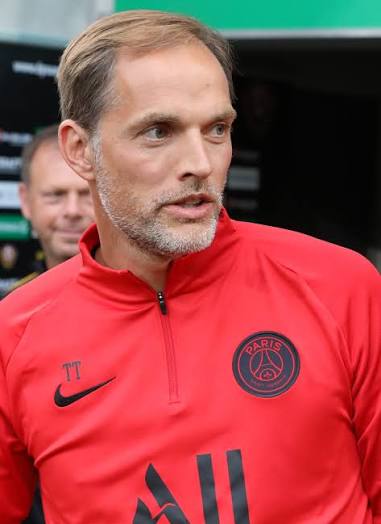
Thomas Tuchel has never been short of opinions. But his recent claim that ball possession is simply not in England’s DNA has ignited a fierce debate about whether the German coach truly understands the nation he is supposed to be inspiring, or whether he is quietly laying the groundwork to excuse his own tactical shortcomings.
The comments, made ahead of England’s World Cup campaign, have struck a nerve with supporters and pundits alike. For a manager handed one of the most prestigious jobs in international football, the suggestion that England are somehow constitutionally incapable of playing a certain style feels less like honest assessment and more like a convenient get-out clause.
England fans have invested enormously in this team. Financially, emotionally, and in terms of sheer time and mental energy, the past two years have been a rollercoaster of hope, frustration, and cautious optimism. Tickets have been purchased, hotels booked, flights arranged to far-flung cities across the globe. Supporters have spent hours debating formations, arguing over squad selections, and agonising over whether certain players deserved their place in the group. This is not a fanbase that takes its football lightly.
So when Tuchel stands up and essentially tells those same supporters that their team is not built to play attractive, possession-based football, the reaction was always going to be explosive. The criticism goes beyond mere tactical disagreement. It cuts to the heart of what England supporters expect from their national team and from the man they are paying to lead it.
The Premier League, widely regarded as the most watched football league on the planet, produces players of extraordinary technical quality season after season. The likes of Declan Rice, Jude Bellingham, Phil Foden, and Bukayo Saka are not limited footballers. They are among the most technically gifted players of their generation, capable of controlling a game, moving the ball with precision, and imposing themselves on opposition teams at the highest level. To suggest that England, as a collective, lack the DNA for possession football is to either ignore the evidence or to misunderstand it entirely.
Critics have pointed out that this kind of language from a head coach is deeply problematic. When a manager starts talking about what a team cannot do rather than what it can, it often signals a lack of ambition. It is the language of limitation rather than possibility. And for a nation that has waited decades to recapture the glory of 1966, the idea that the national coach is already managing expectations downward before a ball has been kicked in anger is deeply unsettling.
There is also the question of accountability. Tuchel is an experienced manager who has won the Champions League with Chelsea and has managed at the very highest levels of club football in Germany and France. He knows how to set up a team. He knows how to implement a playing philosophy. If England are not playing the kind of football he wants, that is at least partly a reflection of his own coaching and preparation. Blaming the cultural DNA of English football feels, to many, like an attempt to shift responsibility away from himself and onto a broader, more abstract target.
The timing of the comments has made things worse. England are in the midst of a World Cup campaign that has captured the imagination of the country. Supporters are dreaming of a semi-final, a final, and beyond. The last thing they want to hear from their manager is a philosophical argument about why their team is inherently limited.
Former players and managers have weighed in on the debate, with several arguing that Tuchel’s comments represent a fundamental misreading of what England football is and what it can be. The argument that English players are somehow hardwired to play a direct, physical game belongs to a different era. The modern England squad is technically accomplished, tactically aware, and capable of playing in a variety of different systems.
What supporters want to see is a manager who believes in his players, who pushes them to be better, and who takes responsibility for the team’s performances rather than outsourcing blame to cultural stereotypes. Whether Tuchel can demonstrate that kind of leadership remains to be seen.
For now, the debate rages on. In living rooms, in pubs, on social media, and in the stands, England supporters are asking the same question. Is Thomas Tuchel the right man for this job? And if England fall short of their World Cup ambitions, will anyone be surprised if he reaches for the DNA excuse once more?
Honestly the DNA comment was blown way out of proportion. He’s trying to build a winning mentality not insult anyone. Give the man a chance before writing him off, he’s barely started the job!