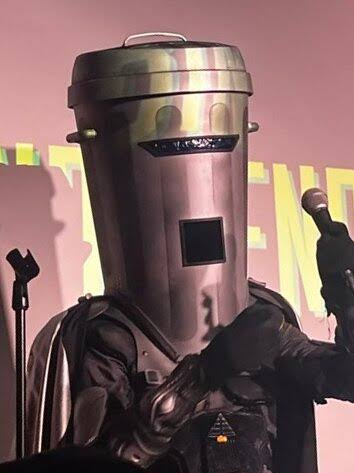
The upcoming Clacton by-election has transformed into one of the most extraordinary electoral contests in recent English political history, with a staggering 34 candidates throwing their hats into the ring to challenge Reform UK leader Nigel Farage in what promises to be a spectacle unlike anything the Essex constituency has seen before.
The sheer volume of candidates standing in the by-election has raised eyebrows across the political establishment, with the ballot paper set to become one of the longest in living memory. Among the 34 hopefuls, no fewer than 20 are standing as independents, reflecting a growing trend of ordinary people choosing to engage directly with the democratic process rather than align themselves with established political parties.
The contest also features a colourful array of joke candidates and protest figures, a tradition with deep roots in English electoral history. These candidates, while unlikely to trouble the frontrunners in terms of vote share, often serve an important purpose in drawing attention to specific issues or simply reminding voters and politicians alike that democracy can and should have a human, sometimes humorous, dimension.
Clacton, a coastal town on the Essex shoreline, has long been considered fertile ground for Farage and his political brand. The constituency, which has faced significant economic challenges over the decades including high unemployment and deprivation relative to surrounding areas, has consistently responded to Farage’s populist messaging. His promise to give the town and its residents a genuine voice in Westminster has resonated strongly with local voters who have often felt overlooked by the main parties.
The by-election was triggered following the resignation of the previous MP, and all eyes are now firmly fixed on whether Farage can convert his considerable local popularity into a historic parliamentary seat. Despite numerous attempts over the years, Farage has never successfully won a seat in the House of Commons, making Clacton potentially the defining moment of his long and turbulent political career.
The mainstream parties face an uphill struggle in the constituency. Labour, the Conservatives, and the Liberal Democrats are all fielding candidates, but internal polling and public surveys suggest none of them are positioned to seriously challenge Farage’s commanding lead. The Conservatives in particular find themselves in an uncomfortable position, having lost significant support to Reform UK nationally, with Clacton serving as a microcosm of the broader threat Farage poses to the traditional right-wing vote in England.
Political analysts have pointed out that the large number of independent candidates, while unlikely to change the fundamental outcome of the race, does reflect a broader mood of disillusionment with conventional politics across England. Many of these independents have cited frustration with career politicians, a lack of local representation, and a desire to bring fresh perspectives to Westminster as their primary motivations for standing.
The presence of novelty candidates has also sparked debate about the nature of English democracy itself. Some commentators argue that joke candidates trivialise the electoral process, while others contend that they represent a vital safety valve in a healthy democratic system, allowing citizens to register protest votes or simply inject some levity into what can often be a deeply divisive and serious affair.
For the people of Clacton themselves, the by-election represents something far more immediate and personal than a national political drama. Local issues including the state of the town centre, coastal erosion, access to healthcare services, and economic regeneration are front of mind for many residents as they consider how to cast their votes.
The Electoral Commission has confirmed that all 34 candidates have met the necessary legal requirements to stand, including the payment of the required deposit of five hundred pounds, which candidates forfeit if they fail to secure at least five percent of the vote. Given the crowded field, a significant number of those standing are almost certainly facing the loss of their deposits.
As campaigning intensifies in the coming weeks, Clacton is set to find itself at the very centre of the English political conversation. Whether the by-election delivers the breakthrough moment Farage has long sought, or whether the extraordinary field of challengers manages to complicate his path to victory in some unexpected way, the result will be watched closely by political observers across the country.
One thing is certain: with 34 candidates, a famous frontrunner, and the full glare of the national media descending on this Essex seaside town, the Clacton by-election is shaping up to be one of the most talked about and closely scrutinised contests in recent English political memory.
34 candidates?! That’s not democracy, that’s a circus alright. Half of them probably just want their 15 minutes. Farage will walk it and everyone knows it, the whole things a bit of a joke really.