Winter oilseed rape has always been a demanding crop, but with input costs still biting hard across Irish farms, growers are being urged to take a closer look at what organic manure can do for their bottom line.
The case is straightforward. Oilseed rape is a heavy feeder, particularly when it comes to nitrogen, sulphur and phosphorus. Synthetic fertilisers to cover those needs do not come cheap. But farms that have access to slurry, farmyard manure or other organic materials are sitting on a resource that can cover a significant chunk of those requirements at a fraction of the cost.
The timing of applications is where it gets interesting. Autumn is a critical window for oilseed rape establishment, and getting organic nutrients into the seedbed before drilling can give the crop a strong foundation without reaching straight for the bag of chemical fertiliser. A well-planned organic manure strategy at this stage can meaningfully reduce the volume of synthetic inputs needed later in the season.
Slurry applied ahead of drilling is particularly valuable. Cattle slurry carries useful levels of available nitrogen along with phosphorus and potassium, and when incorporated properly, it sets the crop up well for the winter period. The key is application timing and soil conditions. Applying to a warm, workable seedbed in late summer allows the nutrients to begin breaking down before the crop even emerges.
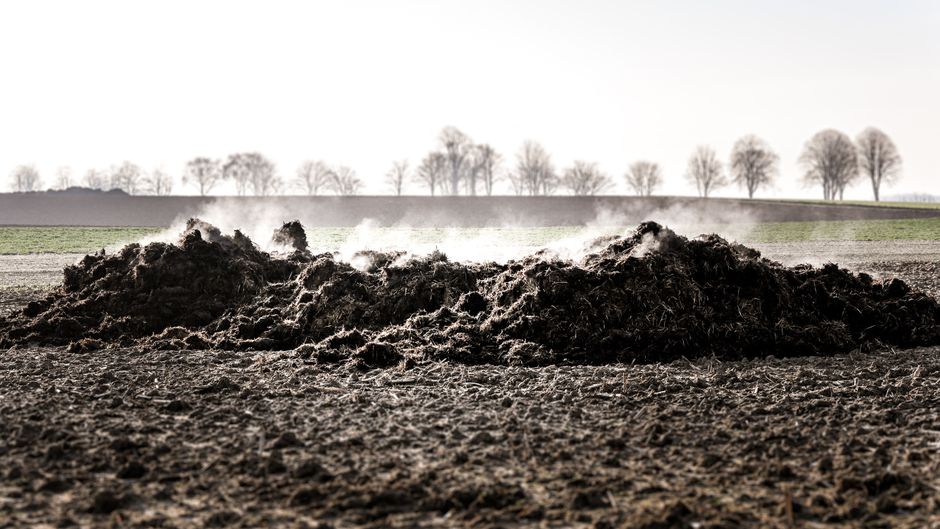
Farmyard manure tells a similar story. While its nutrient release is slower and less predictable than slurry, it brings real benefits in terms of soil structure and organic matter, both of which matter enormously for a crop that needs to anchor itself before the cold sets in. On lighter soils especially, the soil conditioning effect of solid manure can be just as valuable as the nutrients it carries.
Sulphur is one area where organic sources can genuinely surprise farmers. Oilseed rape has one of the highest sulphur demands of any combinable crop, and deficiency will hammer yield potential and oil content. Organic manures, particularly from cattle and pigs, carry meaningful sulphur levels that are often overlooked when farmers are calculating their fertiliser programmes. Factoring these in properly can reduce or even eliminate the need for additional sulphur products in many situations.
The financial sums stack up quickly. On a typical Irish tillage farm, the nitrogen, phosphorus and potassium value locked up in a reasonable volume of cattle slurry can run to well over a hundred euro per thousand gallons when priced against current synthetic fertiliser rates. Across an oilseed rape crop, the potential savings across the full season run into hundreds of euro per hectare when organic sources are used strategically and the synthetic programme is adjusted accordingly.
None of this means abandoning synthetic fertilisers entirely. Spring nitrogen top-dressing remains essential for pushing the crop to its yield potential, and there will always be situations where specific nutrient gaps need to be filled with precision products. But the proportion of the overall programme that can be covered organically is often higher than farmers realise, particularly on mixed farms with livestock enterprises generating manure on-site.
Record-keeping and nutrient planning are central to making this work. The Nitrates Action Programme sets clear rules around organic nitrogen applications, and farmers need to stay within those limits. But within those boundaries, there is real scope to optimise how and when organic materials are used to maximise their agronomic and economic value.
Soil sampling is the starting point. Without knowing what is already in the ground, it is impossible to know what the crop actually needs. A current soil analysis, combined with an honest accounting of what organic manures will deliver, gives a much clearer picture of where synthetic inputs are genuinely necessary and where money is being spent that does not need to be.
For Irish tillage farmers watching every euro of input cost, winter oilseed rape and organic manure are a combination worth taking seriously. The crop has the yield potential to justify its place in the rotation. Managing it smartly, and using every organic resource available, is how that potential gets turned into a profit.