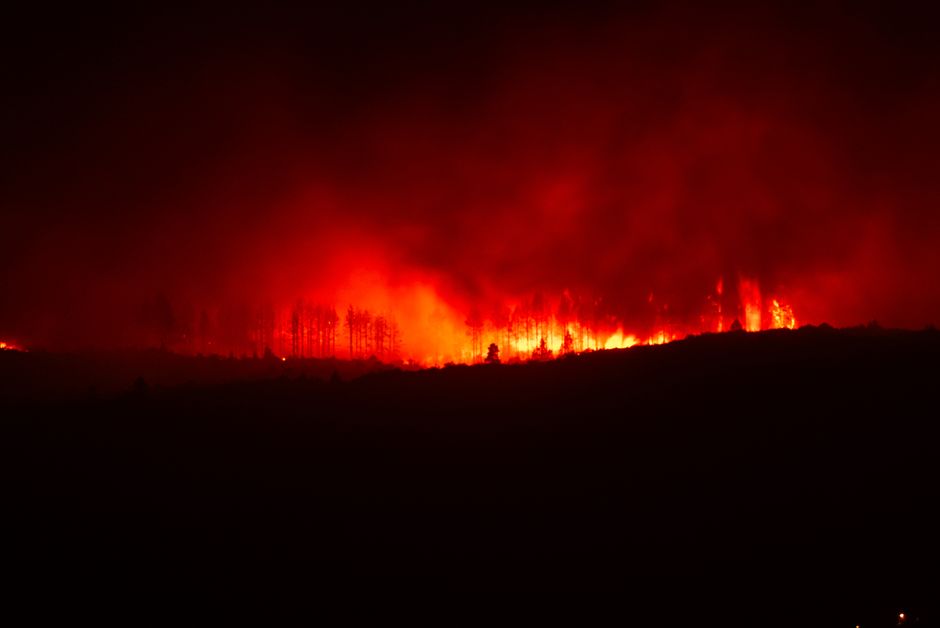
Firefighters are still battling a wildfire in the Cairngorms that has now been burning for nearly a month, as Scotland faces a “very high” wildfire warning covering large swathes of the country.
The Scottish Fire and Rescue Service has been dealing with the Cairngorms blaze for four weeks now, with crews continuing to work the fire as dry and windy conditions make the job even harder. The warning, which runs from Wednesday through Thursday, covers eastern parts of the Highlands as well as eastern and southern Scotland.
A “very high” rating is the second most serious level on the wildfire danger scale, and it signals that conditions on the ground are ripe for fires to start quickly and spread fast. Dry vegetation, low humidity and strong winds are the main factors pushing the risk to this level.
The Cairngorms fire has already become one of the most prolonged wildfire incidents Scotland has seen in recent memory. Emergency crews have been working across rough and remote terrain for weeks, dealing with flare-ups and difficult access routes that make tackling the blaze a serious logistical challenge. Helicopters have been deployed to help reach areas that ground crews simply cannot get to easily.
Wildfire season in Scotland has been getting more intense in recent years, with land managers and fire services pointing to longer dry spells and changing weather patterns as key drivers. The Cairngorms National Park, home to vast stretches of heather moorland and ancient woodland, is particularly vulnerable when conditions turn dry. Heather and peat are highly combustible, and once a fire takes hold in deep peat it can smoulder underground for weeks even after surface flames appear to be out.
The Scottish Fire and Rescue Service has urged the public to be extremely careful in the affected areas and to avoid lighting fires outdoors entirely while the warning is in place. That includes barbecues, campfires and any burning of garden waste. Even a small spark in these conditions can quickly escalate into something that is extremely difficult to control.
Land managers across the affected regions have also been put on alert. NatureScot and the Cairngorms National Park Authority have both been involved in the ongoing response, with conservation concerns adding another layer of complexity to the firefighting effort. The park is home to rare and protected habitats, and prolonged burning can cause serious long-term damage to ecosystems that take decades to recover.
Local communities near the fire zone have been kept informed as the situation develops, with some residents in more remote areas keeping a close eye on wind direction and smoke movement. Farmers and crofters with livestock near affected areas have been particularly anxious, with some having to move animals as a precaution.
The timing of the warning is frustrating for those hoping the situation might ease up. Spring in Scotland can bring some of the highest wildfire risk of the year, particularly in April and May when vegetation from the previous year is dry and dead but new green growth has not yet taken over. This year that risk has been amplified by a spell of dry weather that has left the ground parched across much of the east.
Firefighters on the ground have been praised for their efforts over the past four weeks, working in tough conditions across challenging landscape. The sheer duration of the Cairngorms incident highlights just how demanding these events can be, both for the crews involved and for the resources of the fire service as a whole.
Anyone spotting signs of a wildfire is being asked to call 999 immediately rather than attempting to tackle it themselves. With conditions remaining dangerous through the end of the week, authorities are hoping the public takes the warning seriously.
Honestly this is absolutely terrifying, the Cairngorms are stunning and the thought of them burning for five whole weeks is heartbreaking. Hope they get it under control soon, those poor communities nearby must be going through hell right now.