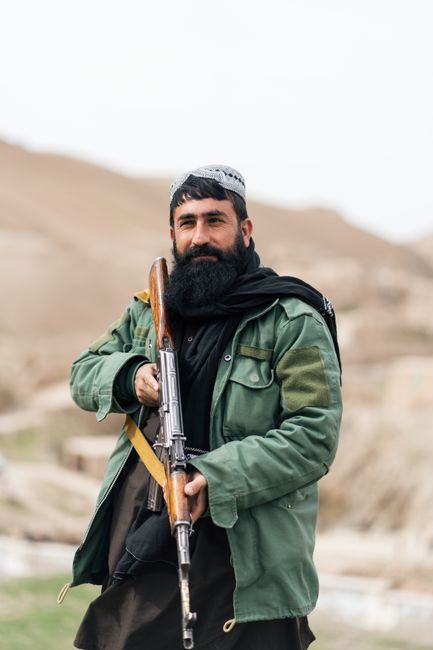
Ireland did not participate in recent talks with the Taliban, Justice Minister Jim O’Callaghan has confirmed, as controversy swirls around a meeting that took place between the extremist Afghan leadership and European representatives.
O’Callaghan told reporters that while the meeting did happen, it was organised and held under the auspices of a previous EU presidency, and Ireland had no seat at that table. The clarification came as questions were raised about the nature and purpose of any European engagement with the Taliban regime, which seized control of Afghanistan in 2021 following the chaotic withdrawal of US and NATO forces.
The Taliban have been widely condemned by human rights organisations for their brutal rollback of civil liberties in Afghanistan, particularly their near-total erasure of women from public life. Girls are banned from secondary school and university. Women cannot work in most sectors, cannot travel without a male guardian, and are largely confined to their homes. Against that backdrop, any formal engagement with Taliban representatives by Western governments tends to draw sharp criticism.
O’Callaghan was keen to distance Ireland from the meeting entirely. He confirmed the talks were a matter for whichever EU member state held the rotating presidency at the time, and that Ireland was not involved in organising or attending them. The EU presidency rotates every six months between member states, meaning different countries take the lead on diplomatic and political engagements during their term.
The controversy touches on a broader and genuinely difficult debate within European foreign policy circles. On one side, there are those who argue that refusing all contact with the Taliban achieves nothing practical. Afghanistan is in the grip of a humanitarian crisis, with millions facing starvation and poverty. Aid organisations, the United Nations, and various governments have argued that some level of communication is necessary just to keep basic humanitarian operations running on the ground.
On the other side, critics argue that any formal meeting with Taliban representatives hands them a degree of legitimacy they have not earned and do not deserve. Women’s rights groups in particular have been vocal in opposing any engagement that is not directly tied to concrete improvements in how women and girls are treated inside Afghanistan.
For Ireland, the issue carries some domestic political weight as well. The country has a strong tradition of humanitarian engagement and has consistently supported international development and human rights causes. Any suggestion that Irish officials had sat down with Taliban representatives without conditions would likely have provoked a significant backlash.
O’Callaghan’s confirmation that Ireland stayed out of the talks will offer some reassurance to those concerned about the optics of European governments normalising contact with the regime in Kabul. But the broader question of how Europe should handle Afghanistan is far from settled, and this episode is unlikely to be the last time it surfaces as a political flashpoint.
The Taliban took over Afghanistan over three years ago and no country in the world has formally recognised their government. Yet engagement, informal or otherwise, has gradually crept back onto the agenda as the humanitarian situation worsens and the reality of their control over the country becomes harder to simply ignore.