He was Dingle’s most famous resident for over three decades, and now Fungie the dolphin is giving up one more secret from beyond the grave. Scientists have managed to recover DNA from the beloved bottlenose dolphin, and the results are genuinely surprising.
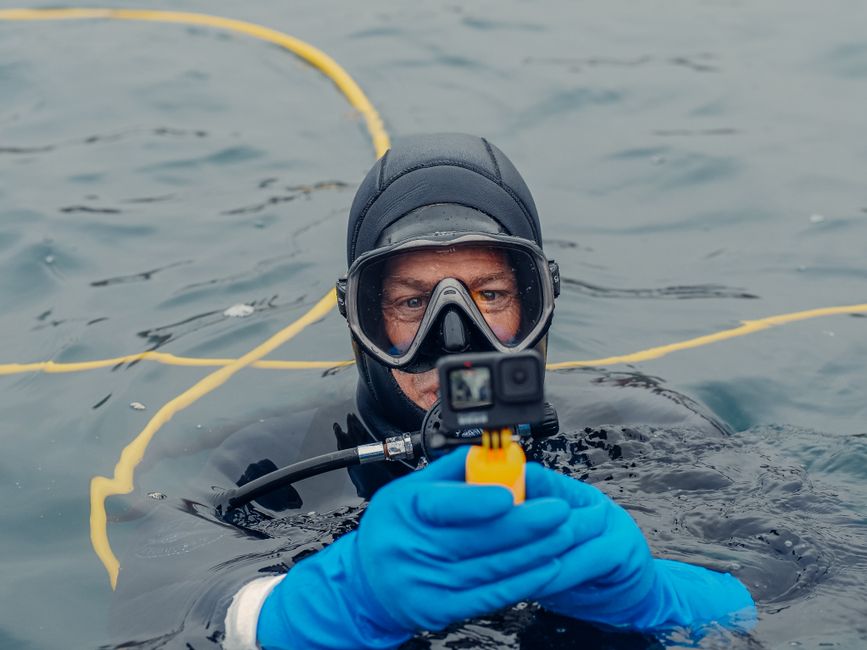
Researchers extracted genetic material from an old wetsuit belonging to Denis O’Regan, a member of the Irish Whale and Dolphin Group, who spent years swimming alongside Fungie in Dingle Bay. The suit had absorbed enough biological material from the dolphin over years of close contact to make DNA analysis possible. It is a remarkable bit of scientific detective work, given that Fungie himself disappeared in October 2020 after spending 37 years as a fixture in the Kerry harbour.
What the DNA revealed has turned a few heads in the marine biology world. Fungie was not a purebred bottlenose dolphin in the straightforward sense. The analysis points to mixed ancestry, suggesting he carried genetic markers from more than one dolphin lineage. It adds a whole new layer to the story of an animal that was already considered pretty unusual, given his decades-long preference for human company over the company of his own kind.
Bottlenose dolphins typically live in social pods, so Fungie’s solitary lifestyle in Dingle always made him something of an oddity. Researchers have long speculated about why he chose to stay, why he bonded so strongly with humans, and whether there was something in his nature that made him different. The mixed ancestry finding does not answer all of those questions, but it does suggest his background was more complex than previously assumed.
Fungie first showed up in Dingle Harbour in 1983 and quickly became a tourist phenomenon. Boat trips to see him brought millions of visitors to the small Kerry town over the years, and he became genuinely iconic, not just locally but internationally. His disappearance in 2020 hit the community hard, with locals and fans around the world hoping he had simply moved on rather than died. No body was ever found.
The IWDG has been involved in research around Fungie for many years, and O’Regan’s contribution through his wetsuit has turned out to be more valuable than anyone might have expected at the time. Environmental DNA and contact DNA collection methods have become increasingly sophisticated, and this case shows just how much information can be pulled from unexpected sources.
The findings are being welcomed by marine researchers who say they shed light not just on Fungie specifically but on dolphin populations and movement along the Irish coastline more broadly. Understanding the genetic diversity of dolphins in Irish waters is useful for conservation efforts, and Fungie’s mixed heritage hints at interactions between different dolphin populations that scientists are keen to explore further.
For the people of Dingle, the news is another reminder of just how special their famous dolphin was. He was never fully understood while he was alive, and even now, years after he vanished, he is still surprising people. The town still carries his image everywhere, from murals to merchandise, and the affection for him has not faded.
Whether the DNA findings will change how Fungie is remembered is doubtful. To most people he was simply the friendly dolphin who turned up one day and stayed for nearly four decades. But for scientists, each new piece of information about him adds to a picture of an animal that was genuinely one of a kind, not just in personality but apparently in genetics too.