For many women across England, endometriosis is not just a medical condition. It is a career-ending, life-altering force that operates largely in silence, dismissed for years by doctors and employers alike. Now, as a parliamentary inquiry into the disease gets underway, three women are sharing their stories of how endometriosis stripped them of their livelihoods and their sense of self.
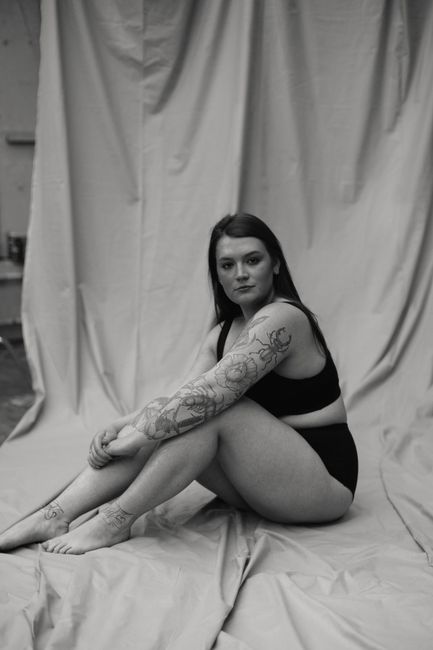
Among them is a former model who was forced to abandon a promising career after repeatedly losing consciousness due to the severity of her symptoms. The pain, she explains, was not manageable with paracetamol and a hot water bottle. It was the kind that sent her body into shock, leaving her collapsed on floors, unable to work, unable to function.
‘I would be on set and suddenly feel everything closing in,’ she recalled. ‘I passed out more times than I can count. Eventually, I had no choice but to stop. The industry does not wait for you to recover.’
Endometriosis affects roughly one in ten women and people assigned female at birth in England, yet diagnosis still takes an average of eight years. During that window, countless women lose jobs, miss opportunities, and are told their pain is exaggerated or psychological. The condition occurs when tissue similar to the lining of the womb grows in other parts of the body, causing chronic pain, fatigue, and in many cases, infertility.
The parliamentary inquiry aims to examine why diagnosis remains so delayed, why treatment options are so limited, and what impact the condition has on women’s professional and personal lives. Campaigners have long argued that endometriosis is under-researched and underfunded, a direct consequence of a medical system that has historically minimised conditions affecting women.
A second woman who spoke out worked in a physically demanding role before her symptoms became unmanageable. She described years of being told her pain was normal, that periods were supposed to be uncomfortable, and that she simply needed to push through. By the time she received a diagnosis, she had already been passed over for promotions and had taken so much sick leave that her position became untenable.
‘Nobody tells you that what you are experiencing is not normal,’ she said. ‘You internalise it. You think you are weak. It took me a decade to find out there was actually something seriously wrong.’
The third woman described the emotional toll of managing a condition that is invisible to the outside world. She appeared healthy. She smiled at meetings. She delivered her work on time, even when she was taking prescription painkillers strong enough to make concentration nearly impossible. Eventually, the performance became unsustainable.
‘There is enormous pressure to pretend you are fine,’ she said. ‘But behind the scenes, I was planning my entire life around my cycle. Every decision, every commitment, every job application, was filtered through the question of whether I could physically manage it.’
Campaigners and medical professionals giving evidence to the inquiry are calling for mandatory endometriosis training for GPs, faster referral pathways to specialist centres, and greater workplace protections for those living with the condition. Some are pushing for endometriosis to be formally recognised as a disability under employment law, which would require employers to make reasonable adjustments for affected staff.
England currently has a network of specialist endometriosis centres, but access is inconsistent and waiting lists are lengthy. Many women report being bounced between departments for years before receiving a definitive diagnosis, which typically requires a surgical procedure called a laparoscopy.
The human cost of these delays is enormous. Research has previously estimated that endometriosis costs the English economy billions of pounds annually through lost productivity, repeated GP appointments, and long-term unemployment. Yet investment in research into the condition remains comparatively low.
For the former model, the inquiry represents a moment of reckoning that is long overdue. She has since retrained in a less physically demanding field, but the years she lost, the career she built and then had taken from her, remain a source of grief.
‘I am not asking for sympathy,’ she said. ‘I am asking for the system to do better. For the next generation of women to be believed sooner, diagnosed faster, and given a real chance to live their lives without this hanging over everything they do.’
The parliamentary inquiry is expected to publish its findings later this year, with recommendations directed at NHS England and the Department of Health.
This is so important. my sister struggled for years before anyone took her seriously, kept being told it was “just bad periods”. the impact on her career was massive. really glad parliament is finally looking into this properly
honestly this breaks my heart. i struggled for years before even getting a diagnosis and by then it had already wrecked so much of my life. so glad parliament is finally taking notice but it feels like too little too late for a lot of women